
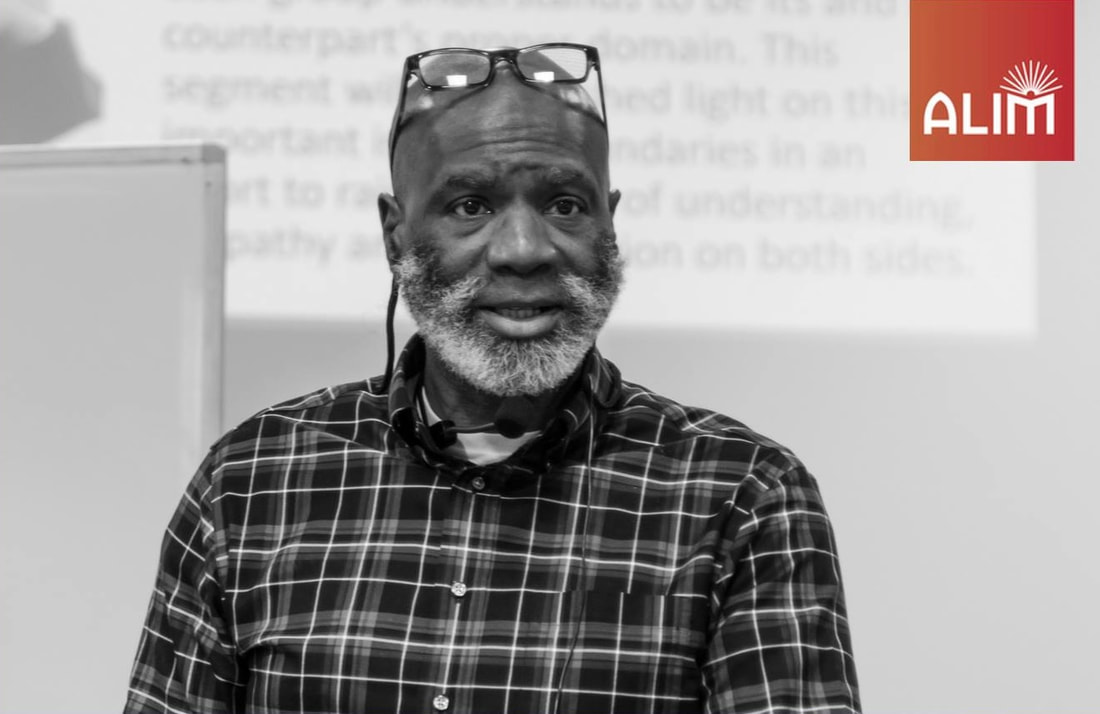
By: Dr. Sherman A. JacksonALIM Core Scholar I have no problem condemning the killing of innocent civilians, wherever and whoever they might be. This is among the dictates of the Qur’ān itself. “O you who believe, be upholders of justice, witnesses for God, even if against yourselves.” Once, the Prophet (SAWS) sent a group of Companions on a reconnaissance mission and gave them explicit instructions to do nothing but gather intelligence. They saw a Qurayshi caravan, however, and decided to attack it. Quraysh was outraged and set out to scandalize the Prophet, as this attack took place in one of the Forbidden Months, which banned anyone from attacking anyone. The Qur’ān refers to this incident in Sūrat al-Baqarah, 2: 217: “They ask you about fighting in the Forbidden Months. Say, fighting in them is an abomination. But impeding the path to God and rejecting Him, as well as the Sacred House, and turning its people out is an even greater abomination. And subjugation is worse than killing (wa ‘l-fitnatu akbar min al-qatl).” The Muslims did something wrong; and God promptly and unequivocally called them on it. But God also made it clear that this misdeed did not and could not excuse or justify the even greater abominations of Quraysh. We constantly hear of Hamas’s recent attack on Israel as “unprovoked.” While it is clearly wrong, Islamically speaking, to kill innocent civilians, I’m not sure I could imagine a greater “fitnah” than the brutal and inhumane conditions under which Palestinians have been forced to live for decades. To speak in such a context of these attacks as “unprovoked” is like referring to the attacks of Nat Turner or Denmark Vesey as “unprovoked.” But this is actually taking me away from the point I want to make. Israel simply cannot take these attacks as an excuse or justification for the continued, pre-meditated killing of thousands of innocent women, children, and men. And the world–– especially my country, the United States–– cannot assuage its conscience and justify its refusal to stop this carnage, through appeals to morally anesthetizing narratives about one side responding to “unprovoked attacks.” I do not know the ultimate solution to the Arab-Israeli crisis. In fact, as a non-Palestinian, I’m not sure it would be my place to decide this even if I did know. But I do not want to go down that rabbit hole. For, for every moment spent wrangling over these messy details, another innocent Palestinian child dies, another innocent Palestinian mother loses a baby, another innocent Palestinian man is crushed under the rubble. No, I want to say here one thing and one thing only: Stop this killing. Stop this killing. Stop this killing––now! Supporters of Israel may see this as dismissive of their grievances and as just another manifestation of anti-Semitism. But let me share here an insight I heard years ago from an Israeli woman on NPR. Responding to her criticism of Israel, the NPR interviewer asked this woman why she was so pro-Palestinian. She responded that she was not pro-Palestinian. Rather, in their brutal treatment of Palestinians, she saw her own people turning into monsters, and she was trying to prevent that. I will not conceal my support for Palestinians. But I also worry about what this kind of continued killing of innocent people might do to the souls of Israelis and those in the rest of the world— especially my country, the U.S.— who have the power to step in and stop this carnage but just sit back and let it unfold. In the end, we should all remind ourselves that the world that evolves out of this will be a world in which we will all have to live. Stop this killing. Stop this killing. Stop this killing—now! About the authorDr. Sherman Jackson is the King Faisal Chair of Islamic Thought and Culture, and Professor of Religion and American Studies and Ethnicity at the University of Southern California (USC). He was formerly the Arthur F. Thurnau Professor of Near Eastern Studies and Visiting Professor of Law and Professor of Afro-American Studies at the University of Michigan (Ann Arbor). Dr. Jackson received his Ph.D. from the University of Pennsylvania and has taught at the University of Texas at Austin, Indiana University, Wayne State University and the University of Michigan. Dr. Jackson is a co-founder, Core Scholar, and member of the Board of Trustees of the American Learning Institute for Muslims (ALIM), an academic institution where scholars, professionals, activists, artists, writers, and community leaders come together to develop strategies for the future of Islam in the modern world.
3 Comments
Hadia
12/4/2023 09:30:38 pm
Thank you for your moral courage on this topic.
Reply
Your comment will be posted after it is approved.
Leave a Reply. |
|