American Learning Institute for Muslims
  • About
    • Our History
    • Board of Trustees
    • Team
    • Testimonials
  • In Person
    • ALIM Umrah Trip
    • ALIM Summer Program >
      • Register Now
      • Financial Aid
      • Confirmed Scholars
      • Course Descriptions
      • Testimonials
      • FAQ
      • Refer or Sponsor
      • Highlights
      • Photo Gallery
      • Sample Schedule
      • Welcome Packet
      • Facilitator Application
  • Virtual
    • Book Club
    • 2025 Online Winter Program
    • Istighfar & Tawbah Course
    • Navigating Post-Modernity >
      • Register
      • Register
    • Malcolm X
  • Media
    • FRAMES
    • Blog >
      • Ust. Ubaydullah Evans
      • Dr. Sherman Jackson
      • Dr. Muneer Fareed
      • Dr. Ali Sulaiman Ali
      • Reel Talk
    • YouTube
    • News
  • Scholars
    • Request a Scholar
    • ALIM Core Scholars >
      • Dr. Sherman Jackson
      • Dr. Muneer Fareed
      • Dr. Ali Sulaiman Ali
    • Scholar in Residence >
      • Ustadh Ubaydullah Evans
    • Guest Scholars >
      • Imam Mohamed Hag Magid
      • Dr. Hadia Mubarak
      • Mohammed Tayssir Safi
      • Usta. Zaynab Ansari
      • Imam Zaid Shakir
      • Dr. Umar Faruq Abd-Allah
      • Dr. Jawad Qureshi
      • Dr. Zainab Alwani
      • Ust. Shad Imam
      • Dr. Jonathan Brown
      • Dr. Ovamir Anjum
      • Dr. Omar Nasim
      • Dr. Omar Suleiman
      • Dr. Sulayman Nyang
      • Dr. Ingrid Mattson
      • Imam Dawud Walid
  • Contact
    • ​Alim Email Sign-Up
  • Support
    • Endowment Fund

Blog


Maqasid and the Second Amendment

6/3/2022

0 Comments


By Ustadh Ubaydullah evans

Picture
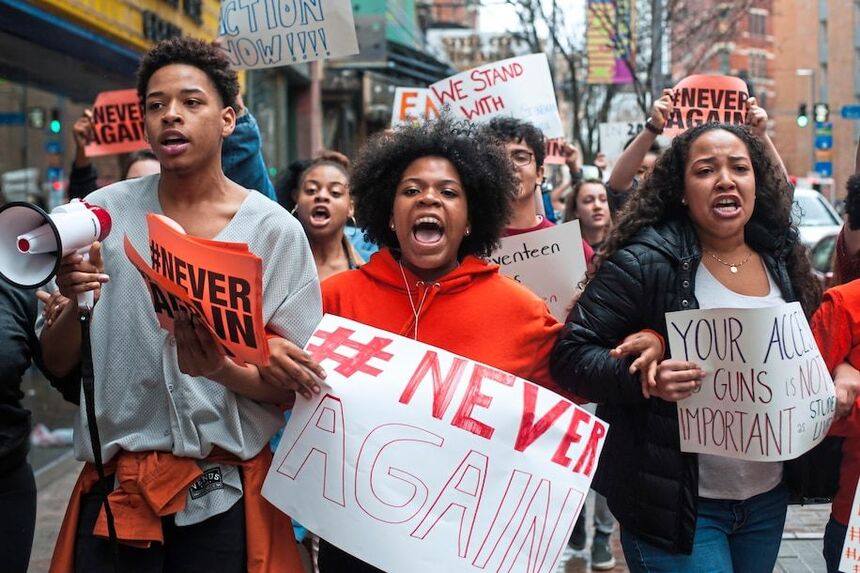
Photograph by Stephanie Strasburg / Pittsburgh Post-Gazette AP
Why did one straw break the camel’s back? / Here’s the secret/ the million other straws underneath it/ it’s all mathematics —Yasiin Bey (Mos Def).

Islamic law predates the creation of the modern nation-state. As such, the kind of legal monism (idea of there being a single “law of the land”) and centralization of power enjoyed by modern nations was unfathomable to Muslim political theorists in the classical period.  By comparison, theirs was an ethic of non-domination and personal liberty vis-à-vis the State—at least with regard to a matter like the right to bear arms. Interestingly enough, it appears that this incidental feature of the pre-modern world (non-domination vis-à-vis the State) is an intentional moral commitment for those who refuse to countenance any nullification of their 2nd Amendment rights.  However, our tradition subjects all moral commitments to an assessment of their impact on the Maqāṣid (objectives) of the Shari’ah. The preservation of: Faith, life, family, human cognitive ability, wealth, and dignity.  Stated differently, where the will of God is concerned, no moral commitment that can be shown to harm or jeopardize the aforementioned values can be regarded as sound.
In 1964, U.S. Supreme Court Justice Potter Stewart said in his Order that he couldn’t describe pornography but rather famously proclaimed, “I know it when I see it.” We live in politically charged times. Levels of dogmatic commitment once reserved for religion have seemingly been transferred to politics. Muslims inherit a tradition of sacred values. Yet the soundness and desirability of specific expressions of those values are assessed according to real-world metrics. Thus, when moral commitments (religious, cultural, political, etc) are held with blind faith and unflinching chauvinism…"We know it when we see it.” Within the gun-control debate positions on all sides have become calcified and reactionary. By invoking the objectives of the Shari’ah, Muslims might make an original contribution to the discourse. One of the subtexts of the current conversation is that beyond the necessity of “repudiating harm”—to borrow from Jonathon Haidt’s useful taxonomy of morality—those on the left side of the political spectrum don’t appear to have moral conviction about anything else. Thus it’s easy to dismiss them as “rootless cosmopolitans,” who would just as soon destroy traditions of sportsmanship, hunting, and self-defense as they would ban specific kinds of weapons or arms transactions.  As a result, gun-rights activists are usually able to respond to the one dimensional moral outlook of their political rivals instead of being forced to delimit their own. Put succinctly, a nuanced moral outlook is one that recognizes that some costs are too high to incur in pursuit of specific concretizations of our values. Islamic tradition might be seen as a referendum on this shamefully impoverished all or nothing moral reasoning.               

The 2nd Amendment does more than enshrine our right to bear arms. In many ways it is an expression of our fundamental character. From the Nation’s inception we’ve been shaped by violence and by extension guns: The genocide of the indigenous tribes of this land, the fierce, uncompromising vision of political freedom and brave volunteerism that won the Revolutionary War, unconscionable enslavement and subjugation of Africans, Civil War that engulfed this Nation over the question of slavery, Westward expansion, etc. And at current, we’re still, in many ways defined by violence: the explosion of urban crime and militarization of the police during the so-called War on Drugs, gratuitous gun violence depicted within our entertainment, the many proud gun-owning Americans who maintain that the line between subject and citizen is defined in arms ownership, etc. This is the civilization of the gun. Nonetheless, the present moment dictates soul-searching. Only God is immutable. The pages of history are filled with the stories of civilizations that collapsed, imploded, or were vanquished by way of their resistance to change. Is this us?      

The blood spilled by way of gun violence in America will not be stanched by way of policy reform alone. However, I am aware of the status of law as a weathervane that symbolizes the direction of our values. Nor will the problem be solved by way of diversion: It’s not the guns; it’s a mental health issue. It’s not the guns; it’s really about social isolation. It’s not the guns, it’s about the over prescription of SSRI’s. Why are we talking about mass shootings? What about the urban violence in places like Chicago? Correction: It’s about all of those things and guns! The Nation is in need of a new moral vision but one which exercises its demons while preserving and even accentuating its virtues. America will probably never resemble Sweden, Norway, or Denmark in its relationship to government or guns. There is a libertarian thread in the warp and weft of this nation that won’t allow for that. However, a moral vision comprehensive enough to recognize the connection between guns violence and other relevant social and cultural factors will serve us well. Furthermore, we need moral clarity which does not underestimate tradition, freedom, autonomy, nor the numerous benefits secured by way of them. Even so, the Islamic legal maxim states dar’u al-mafāsidi muqaddam ‘alā jalb al-Māṣāliḥ (Where the two are mutually exclusive, preventing harm takes precedence over securing benefit). Absolute commitment to anything other than God and His Messenger is misguidance.                                                          ​
0 Comments


Your comment will be posted after it is approved.


Leave a Reply.

Join Our Mailing List

Get exclusive content and updates straight to your inbox.

By subscribing, you agree to receive occasional emails from ALIM. View terms.

 stay connected
​@alimprogram

Support ALIM
Summer Program
PO Box 871785 Canton, MI 48187
(734) 956-0698
2025 © American Learning Institute for Muslims. All rights reserved.
ALIM is a 501(c)(3) organization. All donations are tax deductible. Our EIN is 38-3633579.
Zelle: [email protected]
​
​Terms of Service | Privacy Guidelines
  • About
    • Our History
    • Board of Trustees
    • Team
    • Testimonials
  • In Person
    • ALIM Umrah Trip
    • ALIM Summer Program >
      • Register Now
      • Financial Aid
      • Confirmed Scholars
      • Course Descriptions
      • Testimonials
      • FAQ
      • Refer or Sponsor
      • Highlights
      • Photo Gallery
      • Sample Schedule
      • Welcome Packet
      • Facilitator Application
  • Virtual
    • Book Club
    • 2025 Online Winter Program
    • Istighfar & Tawbah Course
    • Navigating Post-Modernity >
      • Register
      • Register
    • Malcolm X
  • Media
    • FRAMES
    • Blog >
      • Ust. Ubaydullah Evans
      • Dr. Sherman Jackson
      • Dr. Muneer Fareed
      • Dr. Ali Sulaiman Ali
      • Reel Talk
    • YouTube
    • News
  • Scholars
    • Request a Scholar
    • ALIM Core Scholars >
      • Dr. Sherman Jackson
      • Dr. Muneer Fareed
      • Dr. Ali Sulaiman Ali
    • Scholar in Residence >
      • Ustadh Ubaydullah Evans
    • Guest Scholars >
      • Imam Mohamed Hag Magid
      • Dr. Hadia Mubarak
      • Mohammed Tayssir Safi
      • Usta. Zaynab Ansari
      • Imam Zaid Shakir
      • Dr. Umar Faruq Abd-Allah
      • Dr. Jawad Qureshi
      • Dr. Zainab Alwani
      • Ust. Shad Imam
      • Dr. Jonathan Brown
      • Dr. Ovamir Anjum
      • Dr. Omar Nasim
      • Dr. Omar Suleiman
      • Dr. Sulayman Nyang
      • Dr. Ingrid Mattson
      • Imam Dawud Walid
  • Contact
    • ​Alim Email Sign-Up
  • Support
    • Endowment Fund