American Learning Institute for Muslims
  • About
    • Our History
    • Board of Trustees
    • Team
    • Testimonials
  • In Person
    • ALIM Umrah Trip
    • ALIM Summer Program >
      • Register Now
      • Financial Aid
      • Confirmed Scholars
      • Course Descriptions
      • Testimonials
      • FAQ
      • Refer or Sponsor
      • Highlights
      • Photo Gallery
      • Sample Schedule
      • Welcome Packet
      • Facilitator Application
  • Virtual
    • Book Club
    • 2025 Online Winter Program
    • Istighfar & Tawbah Course
    • Navigating Post-Modernity >
      • Register
      • Register
    • Malcolm X
  • Media
    • FRAMES
    • Blog >
      • Ust. Ubaydullah Evans
      • Dr. Sherman Jackson
      • Dr. Muneer Fareed
      • Dr. Ali Sulaiman Ali
      • Reel Talk
    • YouTube
    • News
  • Scholars
    • Request a Scholar
    • ALIM Core Scholars >
      • Dr. Sherman Jackson
      • Dr. Muneer Fareed
      • Dr. Ali Sulaiman Ali
    • Scholar in Residence >
      • Ustadh Ubaydullah Evans
    • Guest Scholars >
      • Imam Mohamed Hag Magid
      • Dr. Hadia Mubarak
      • Mohammed Tayssir Safi
      • Usta. Zaynab Ansari
      • Imam Zaid Shakir
      • Dr. Umar Faruq Abd-Allah
      • Dr. Jawad Qureshi
      • Dr. Zainab Alwani
      • Ust. Shad Imam
      • Dr. Jonathan Brown
      • Dr. Ovamir Anjum
      • Dr. Omar Nasim
      • Dr. Omar Suleiman
      • Dr. Sulayman Nyang
      • Dr. Ingrid Mattson
      • Imam Dawud Walid
  • Contact
    • ​Alim Email Sign-Up
  • Support
    • Endowment Fund

Blog


Requiem for (the old) ISNA

9/16/2022


By: Ustadh Ubaydullah Evans

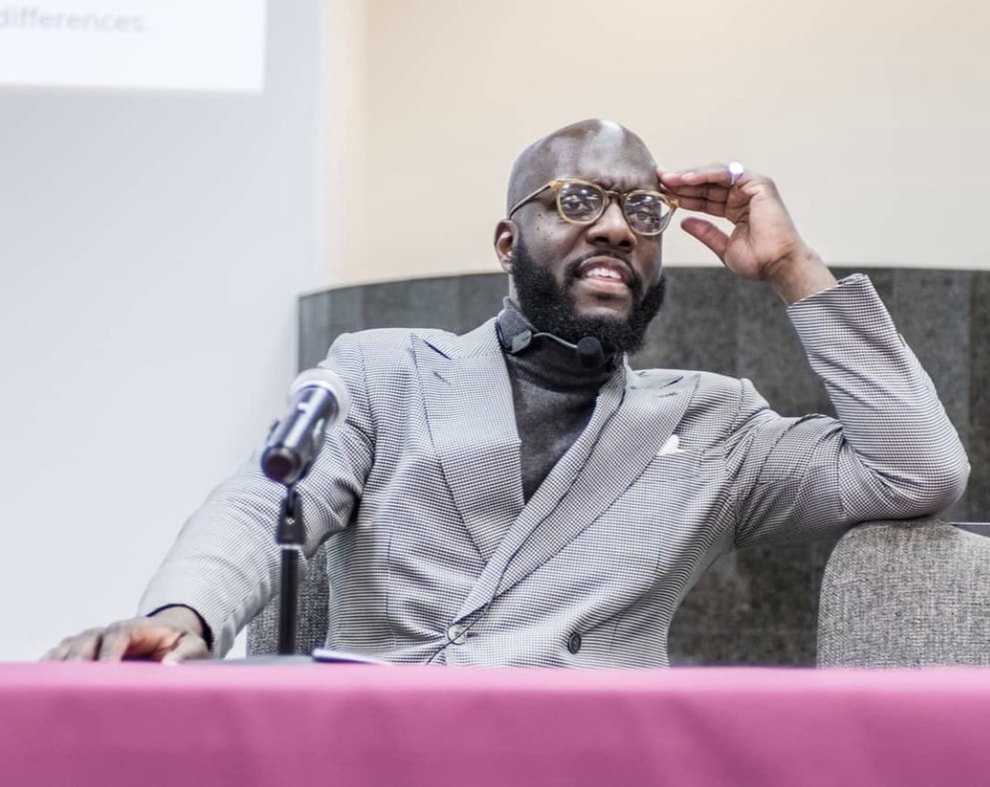
ALIM’s first Scholar-in-Residence.

Picture
Admittedly, I didn’t grow up attending a mosque under the umbrella of the Islamic Society of North America (ISNA). I didn’t have a subscription to Islamic Horizons, the once thriving bi-monthly magazine of ISNA.  And while I was familiar with some of the leadership of ISNA (Sheikh Mohammed Nur Abdullah, Muzzammil Siddiqi, Dr. Ingrid Mattson, and of course, our very own, Dr. Muneer Fareed) for me, the relevance of ISNA was never an extension of its leaders. For many, The Islamic Society of North America was an organization identified by one thing and one thing only: The annual convention. In fact, when my friends and I said “ISNA” we were only referring to the convention. As such, being invited as a speaker for the 59th annual ISNA convention which took place in my hometown Chicagoland community, I graciously and enthusiastically accepted.
Of course, a great deal of preparation and intentionality within the programming was in evidence. I couldn’t make it to many sessions but the roster of speakers struck me as compelling as that of previous years.  All the volunteers I encountered were poised, kind and helpful. The Hyatt Regency Hotel, Donald Stephens Convention Center, and surrounding environs appeared comfortable and accommodating. And yet, this year I couldn’t detect any of the energy and excitement that I had come to associate with the convention. Was the low turnout and diminished spirit the result of lingering concerns about COVID-19? Was it the result of increasingly fractious political divisions within the Muslim community? Or are we witnessing a shift in attitudes towards intra-ethnic/religious assemblies and collectives? Does the surfeit of Islamic content available online make attendance at conventions like ISNA unnecessary? Whatever the reason, the apparent decline in the popularity of ISNA represents a significant loss for me. I know this will make me seem mawkish and culturally out of touch. However, I will submit that the annual ISNA convention has probably been the closest thing I’ve known to an “Islamic family reunion,” since embracing Islam. It was the first place (mostly in the bazaar among students that were returning from abroad) I encountered the trans-national culture of Islamic scholarship that would come to shape my adult life. And perhaps most importantly, it was the place that my good friend Amjad Tarsin, then a 1st year law student at the University of Michigan, initially informed me about a fellow student on campus there…who eventually became my wife. So ISNA has been the misc-en-scene for a lot of fond personal memories but what will be its value for our community moving forward?
           
First of all, I am aware that when it comes to national conventions, ISNA is not nor has it ever been the only game in town. The Muslim American Society and the Islamic Circle of North America have also held annual conventions for many consecutive years. I also recall the annual Labor Day weekend conventions held by the American Society of Muslims (The community of the late Imam Warith Deen Mohamed—May Allah have mercy upon him) some years back. To be clear, this post is about ISNA because I came of age in the Muslim community attending ISNA. By discussing ISNA I am not in any way conferring preeminence or priority upon the organization and its annual convention. I am only expressing concern about an institution which played a pivotal role in my formation as a Muslim—albeit improbably!
         
I can scarcely think of an Islamic organization with a national presence whose charter is not expressed in the broadest, most inclusive language possible. Indeed, it would be highly unusual for a national Islamic organization to state explicitly: Although we purportedly represent the interests of the national Muslim community our priority is really serving Muslims of insert____ (Indian/Arab/Southeast Asian/Continental African/ Balkan/ Blackamerican/ White American) descent. Quite the reverse, national organizations usually acquire their distinct cultural sensibilities by default. Inevitably, their missions and priorities begin to follow suit. Those of us who fall outside the purview of those sensibilities are usually left to define our own unique relationship with the organization. To be sure, this is how I would describe my historical relationship with the ISNA convention. And perhaps on account of a paucity of alternatives, this was good enough. Times have changed. Social media has made highly specific affinity groups the social unit du jour. In such a context, it might be less attractive to attend the annual conference of a national organization which, in spite of the broad language of its mission statement, appears just another affinity group. 
           
Although it will strike many of us as counter-intuitive—especially those that have witnessed the dangers of unprincipled disputation first-hand—, ISNA and other national orgs should embrace a culture of debate and civil discourse. In real time, this would mean moving away from a “prescriptive” model of engaging the national community. And it would mean embracing a “descriptive” model of community engagement. In other words, instead of offering workshops, lectures, etc. consistent with the positions of a single organization, the national community needs a platform upon which it can converse. 
           
While this would certainly inject much needed vitality into conferences like ISNA, it would require a lot maturity on all sides. It might mean a willingness to show our neighbors that not all Muslims aspire to “model minority” status. It could also entail offering a platform to a wide range of opinions about matters as far afield as racism, abortion, political identity, the value and scope of orthodoxy in our time, etc. Indeed, I realize that for an organization with a history of promoting a mainstream, politically safe, religiously orthodox exponent of Islam, this might appear to represent a complete departure from that history. To be sure, I do not have in mind a national convention in which every aspiring pundit and keyboard warrior is given a platform to voice what may constitute unconscionable views. There must still be standards in training, conduct, civility, etc. However, I fear that if our national conventions and assemblies do not become more representative of our community demographically and intellectually, there will be hardly any need for a national convention. At the current rate, I can actually imagine a time in which we will cease to even make such overtures. Solidarity in our community may go the way of intramural unity among other American religious groups; namely, a strict divide along lines of race, class, political orientation, and geographic location. And what wasted opportunity that would be!          
           
​When I wandered about the bazaar and conference halls of ISNA as a new convert to Islam 20 years ago, all was not well. Many of the issues that separate our community now were present then—maybe to an even greater extent. However, there would be just enough representation of our diverse Muslim collective to engender a feeling of possibility. Might the Ummah of Muhammad (upon him be peace) be the first religious community in America to bring people together in an unprecedented way. At this year’s ISNA convention, that possibility felt more distant and that concerns me.        


Comments are closed.

Join Our Mailing List

Get exclusive content and updates straight to your inbox.

By subscribing, you agree to receive occasional emails from ALIM. View terms.

 stay connected
​@alimprogram

Support ALIM
Summer Program
PO Box 871785 Canton, MI 48187
(734) 956-0698
2025 © American Learning Institute for Muslims. All rights reserved.
ALIM is a 501(c)(3) organization. All donations are tax deductible. Our EIN is 38-3633579.
Zelle: [email protected]
​
​Terms of Service | Privacy Guidelines
  • About
    • Our History
    • Board of Trustees
    • Team
    • Testimonials
  • In Person
    • ALIM Umrah Trip
    • ALIM Summer Program >
      • Register Now
      • Financial Aid
      • Confirmed Scholars
      • Course Descriptions
      • Testimonials
      • FAQ
      • Refer or Sponsor
      • Highlights
      • Photo Gallery
      • Sample Schedule
      • Welcome Packet
      • Facilitator Application
  • Virtual
    • Book Club
    • 2025 Online Winter Program
    • Istighfar & Tawbah Course
    • Navigating Post-Modernity >
      • Register
      • Register
    • Malcolm X
  • Media
    • FRAMES
    • Blog >
      • Ust. Ubaydullah Evans
      • Dr. Sherman Jackson
      • Dr. Muneer Fareed
      • Dr. Ali Sulaiman Ali
      • Reel Talk
    • YouTube
    • News
  • Scholars
    • Request a Scholar
    • ALIM Core Scholars >
      • Dr. Sherman Jackson
      • Dr. Muneer Fareed
      • Dr. Ali Sulaiman Ali
    • Scholar in Residence >
      • Ustadh Ubaydullah Evans
    • Guest Scholars >
      • Imam Mohamed Hag Magid
      • Dr. Hadia Mubarak
      • Mohammed Tayssir Safi
      • Usta. Zaynab Ansari
      • Imam Zaid Shakir
      • Dr. Umar Faruq Abd-Allah
      • Dr. Jawad Qureshi
      • Dr. Zainab Alwani
      • Ust. Shad Imam
      • Dr. Jonathan Brown
      • Dr. Ovamir Anjum
      • Dr. Omar Nasim
      • Dr. Omar Suleiman
      • Dr. Sulayman Nyang
      • Dr. Ingrid Mattson
      • Imam Dawud Walid
  • Contact
    • ​Alim Email Sign-Up
  • Support
    • Endowment Fund