American Learning Institute for Muslims
  • About
    • Our History
    • Board of Trustees
    • Team
    • Testimonials
  • In Person
    • ALIM Umrah Trip
    • ALIM Summer Program >
      • Register Now
      • Financial Aid
      • Confirmed Scholars
      • Course Descriptions
      • Testimonials
      • FAQ
      • Refer or Sponsor
      • Highlights
      • Photo Gallery
      • Sample Schedule
      • Welcome Packet
      • Facilitator Application
  • Virtual
    • Book Club
    • 2025 Online Winter Program
    • Istighfar & Tawbah Course
    • Navigating Post-Modernity >
      • Register
      • Register
    • Malcolm X
  • Media
    • FRAMES
    • Blog >
      • Ust. Ubaydullah Evans
      • Dr. Sherman Jackson
      • Dr. Muneer Fareed
      • Dr. Ali Sulaiman Ali
      • Reel Talk
    • YouTube
    • News
  • Scholars
    • Request a Scholar
    • ALIM Core Scholars >
      • Dr. Sherman Jackson
      • Dr. Muneer Fareed
      • Dr. Ali Sulaiman Ali
    • Scholar in Residence >
      • Ustadh Ubaydullah Evans
    • Guest Scholars >
      • Imam Mohamed Hag Magid
      • Dr. Hadia Mubarak
      • Mohammed Tayssir Safi
      • Usta. Zaynab Ansari
      • Imam Zaid Shakir
      • Dr. Umar Faruq Abd-Allah
      • Dr. Jawad Qureshi
      • Dr. Zainab Alwani
      • Ust. Shad Imam
      • Dr. Jonathan Brown
      • Dr. Ovamir Anjum
      • Dr. Omar Nasim
      • Dr. Omar Suleiman
      • Dr. Sulayman Nyang
      • Dr. Ingrid Mattson
      • Imam Dawud Walid
  • Contact
    • ​Alim Email Sign-Up
  • Support
    • Endowment Fund

Blog


Retrospect for Independence

7/5/2022


By: Ustadh Ubaydullah Evans 

Picture
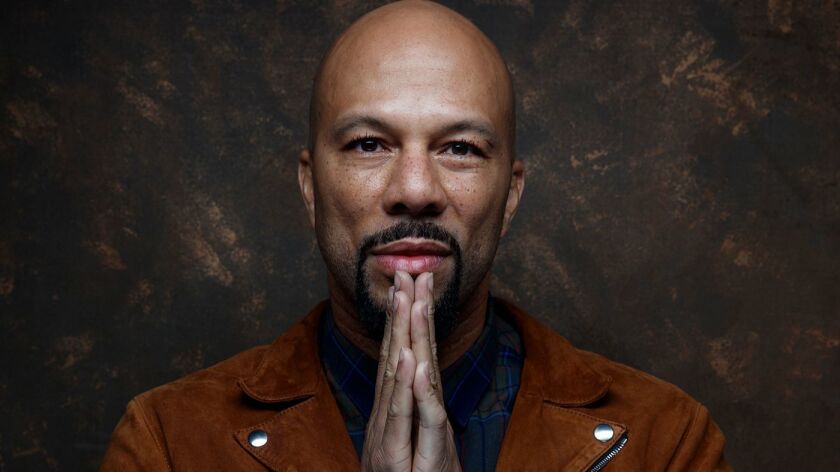
Actor and American hip-hop musician Common (Jay L. Clendenin / Los Angeles Times)
Grammy and Oscar award-winning rapper Common released the song “Retrospect for Life” in 1996. The song, which featured production from fellow Chicago legend, No I.D., a lush musical sample from the inestimable Stevie Wonder and vocals from a then ascending Lauryn Hill, was an instant classic. Offering a rare glimpse of a Black male perspective on abortion, the artist introspectively begins:
Yo check it
Knowing you the best part of life /do I have the right to takes yours?
Cause I created you irresponsibly 
Subconsciously/ knowing the act I was a part of
The start of something, I’m not ready to bring into the world…
 
This song appealed to the conscience of the hip hop community and addressed topics such as: the value of unborn life, sexual irresponsibility, and even high out-of-wedlock birthrates in Black communities. Astonishingly, within my context, the song was never labeled conservative, pro-life, right-wing, or any such epithets. Concluding the first verse, Common even raps:

​…from now on
I’ma use self-control instead of birth control
Cause 315 dollars ain’t worth your soul 
315 dollars ain’t worth your soul
315 dollars ain’t worth it

This was nearly two decades ago but I recall some of the robust conversation induced by “Retrospect for Life.” Young men and women in my neighborhood actively discussed this song: in classrooms, restaurants, campus buildings, CTA buses, etc. I don’t intend to convey that everyone at the time agreed with the sentiments expressed by the artist. Quite the reverse, there were intelligent and impassioned arguments on both sides of the issue. In fact, I don’t even remember my own position! However, reflecting on that time, I am deeply impressed with our ability, as young Black people, to sustain a conversation about an issue of global significance but in a distinct, personal language. Our conversations admitted perspectives and priorities one wouldn’t encounter on Meet the Press, 60 minutes, or Nightline. 
In sharp contrast, when the Supreme Court officially reversed Roe v. Wade many Muslim commentators expressed opinions but with no such independence.  Omit our Arabic names and occasional use of Islamic nomenclature and our conversations could have just as easily taken place between garden-variety American progressives and conservatives. We have assumed the same acridity, intolerance, and overdone points of emphasis. On the one hand, some shockingly claimed it was an irrefutable point of consensus that abortion was ḥarām (unlawful). And others articulated the moral principle du jour of bodily autonomy vis-ắ-vis the State. The point of this post isn’t to treat these issues as unimportant but rather to encourage more productive discourse.

“You are the best nation produced for the benefit of humanity; you enjoin what is right and forbid the wrong and believe in God; And if the People of the Scripture had believed it would have been better for them…” [3:110]

If history is being dictated from without our community and we’re simply trying to align ourselves with its presumed trajectory, are we benefitting anyone? Returning to my initial example, as youth we were able to engage in a polyvalent, multifaceted conversation about abortion. Our exploration wasn’t guided by anything even remotely approaching the vastness of the Qur’ān, Prophetic heritage, and Islamic scholarly tradition. Working with a creative amalgam of conspiracy theory, inchoate Black nationalism, hip hop, and Christian and Islamic lay ethics, we enjoyed thought-provoking exchange: Within our community is it sensible to talk about abortion as purely an issue of bodily autonomy? Is sex also just an issue of bodily autonomy or do nations rise and fall on the basis of how they accommodate family and child-rearing?   Is it possible to uphold the reproductive rights of women without unwittingly supporting a culture of sexual irresponsibility? And even the conspiratorial was admissible...we’re worried about the State limiting our access to abortion; we should be worried about the proliferation of abortion limiting our electoral and economic power! And there were also strong arguments from the other side: All of this stuff about the sanctity of life rings hollow. Especially when that same life is not too sacred to be unjustly tried and punitively sentenced to prison. Our community has been ravaged by the mass-incarceration of black men and paternal-negligence. The idea that women are somehow duty bound to birth and in many cases singlehandedly raise children is unacceptable. They should always be afforded the choice of terminating the pregnancy on the basis their inevitable labor in pregnancy, delivery and (potentially) child-rearing.
We were young. These arguments were not the ne plus ultra of sophistication and thoroughness. For starters, I don’t recall any ideas about ensoulment or personhood of the fetus. However, guided by the lyrics of a good song, we were able to debate the issue and center ourselves. Even if one regards some of the perspectives mentioned above as juvenile or unsophisticated, they were unmistakably focused: “What does abortion mean for Black urban communities?” No matter where you came down on the issue, this was the motion at hand.  By contrast, when Muslims debate womens’ bodily autonomy versus the inviolability of life at conception, I am always left thinking:  Do either of those concepts relate to the ethos of Islam in the manner they relate to Catholicism or philosophical Liberalism? Do we have an independent political voice?  


Comments are closed.

Join Our Mailing List

Get exclusive content and updates straight to your inbox.

By subscribing, you agree to receive occasional emails from ALIM. View terms.

 stay connected
​@alimprogram

Support ALIM
Summer Program
PO Box 871785 Canton, MI 48187
(734) 956-0698
2025 © American Learning Institute for Muslims. All rights reserved.
ALIM is a 501(c)(3) organization. All donations are tax deductible. Our EIN is 38-3633579.
Zelle: [email protected]
​
​Terms of Service | Privacy Guidelines
  • About
    • Our History
    • Board of Trustees
    • Team
    • Testimonials
  • In Person
    • ALIM Umrah Trip
    • ALIM Summer Program >
      • Register Now
      • Financial Aid
      • Confirmed Scholars
      • Course Descriptions
      • Testimonials
      • FAQ
      • Refer or Sponsor
      • Highlights
      • Photo Gallery
      • Sample Schedule
      • Welcome Packet
      • Facilitator Application
  • Virtual
    • Book Club
    • 2025 Online Winter Program
    • Istighfar & Tawbah Course
    • Navigating Post-Modernity >
      • Register
      • Register
    • Malcolm X
  • Media
    • FRAMES
    • Blog >
      • Ust. Ubaydullah Evans
      • Dr. Sherman Jackson
      • Dr. Muneer Fareed
      • Dr. Ali Sulaiman Ali
      • Reel Talk
    • YouTube
    • News
  • Scholars
    • Request a Scholar
    • ALIM Core Scholars >
      • Dr. Sherman Jackson
      • Dr. Muneer Fareed
      • Dr. Ali Sulaiman Ali
    • Scholar in Residence >
      • Ustadh Ubaydullah Evans
    • Guest Scholars >
      • Imam Mohamed Hag Magid
      • Dr. Hadia Mubarak
      • Mohammed Tayssir Safi
      • Usta. Zaynab Ansari
      • Imam Zaid Shakir
      • Dr. Umar Faruq Abd-Allah
      • Dr. Jawad Qureshi
      • Dr. Zainab Alwani
      • Ust. Shad Imam
      • Dr. Jonathan Brown
      • Dr. Ovamir Anjum
      • Dr. Omar Nasim
      • Dr. Omar Suleiman
      • Dr. Sulayman Nyang
      • Dr. Ingrid Mattson
      • Imam Dawud Walid
  • Contact
    • ​Alim Email Sign-Up
  • Support
    • Endowment Fund