American Learning Institute for Muslims
  • About
    • Our History
    • Board of Trustees
    • Team
    • Testimonials
  • In Person
    • ALIM Umrah Trip
    • ALIM Summer Program >
      • Register Now
      • Financial Aid
      • Confirmed Scholars
      • Course Descriptions
      • Testimonials
      • FAQ
      • Refer or Sponsor
      • Highlights
      • Photo Gallery
      • Sample Schedule
      • Welcome Packet
      • Facilitator Application
  • Virtual
    • Book Club
    • 2025 Online Winter Program
    • Istighfar & Tawbah Course
    • Navigating Post-Modernity >
      • Register
      • Register
    • Malcolm X
  • Media
    • FRAMES
    • Blog >
      • Ust. Ubaydullah Evans
      • Dr. Sherman Jackson
      • Dr. Muneer Fareed
      • Dr. Ali Sulaiman Ali
      • Reel Talk
    • YouTube
    • News
  • Scholars
    • Request a Scholar
    • ALIM Core Scholars >
      • Dr. Sherman Jackson
      • Dr. Muneer Fareed
      • Dr. Ali Sulaiman Ali
    • Scholar in Residence >
      • Ustadh Ubaydullah Evans
    • Guest Scholars >
      • Imam Mohamed Hag Magid
      • Dr. Hadia Mubarak
      • Mohammed Tayssir Safi
      • Usta. Zaynab Ansari
      • Imam Zaid Shakir
      • Dr. Umar Faruq Abd-Allah
      • Dr. Jawad Qureshi
      • Dr. Zainab Alwani
      • Ust. Shad Imam
      • Dr. Jonathan Brown
      • Dr. Ovamir Anjum
      • Dr. Omar Nasim
      • Dr. Omar Suleiman
      • Dr. Sulayman Nyang
      • Dr. Ingrid Mattson
      • Imam Dawud Walid
  • Contact
    • ​Alim Email Sign-Up
  • Support
    • Endowment Fund

Blog


Calibrate a Thermometer

11/3/2022

0 Comments


by: ustadh ubaydullah evans

Picture
Calibrate: verb/ cal.i.brate/ `ka-lǝ-brāt/to adjust precisely for a particular function. 
​

I don’t use the word kāfir; well, at least not in public. My particular grasp of the term notwithstanding, the risk its user assumes of being regarded a bad neighbor is simply too great for me. Indeed, this word has come to represent much of what both American Muslims and non-Muslims find unsettling about public religion: Intolerance and chauvinism.  

Salvific exclusivism is the idea that the adherents of only one religion will attain salvation in the Hereafter. Although I’ve neither conducted nor read any empirical research on the matter, anecdotally I can reference a number of stories in which Muslims (particularly millennials) expressed strong opposition to Islamic salvific exclusivism. “What about saints like Mother Teresa, freedom fighters like Martin Luther King Jr, and good people like my best friend—how can they go to Hell?” Each time I hear this I’m taken aback by the directness of the question itself. Where does the presumption that an Islamic understanding of exclusivism does, in fact, consign Mother Teresa, Martin King Jr., and their best friend to Hell come from?
Apparently not from the Qur’ān; with a few notable exceptions (Thutmose II (Fir’aun), Hammān, Abū Lahab, etc.) the Qur’ān does not address the eternal damnation of individuals explicitly named in the text. In fact, nearly every reference to perdition in the Qur’ān mentions archetypical communities and individuals. None of whom, ironically, are mentioned as being damned in spite of their selfless charity, sacrifice and martyrdom on behalf of the oppressed, or good friendship. Quite the reverse, every individual or community made to face divine retribution in the Qur’ān is characterized by both erroneous beliefs about God and mistreatment of the vulnerable.  

To be clear, the Qur’ān does declare Islam the religion of God:
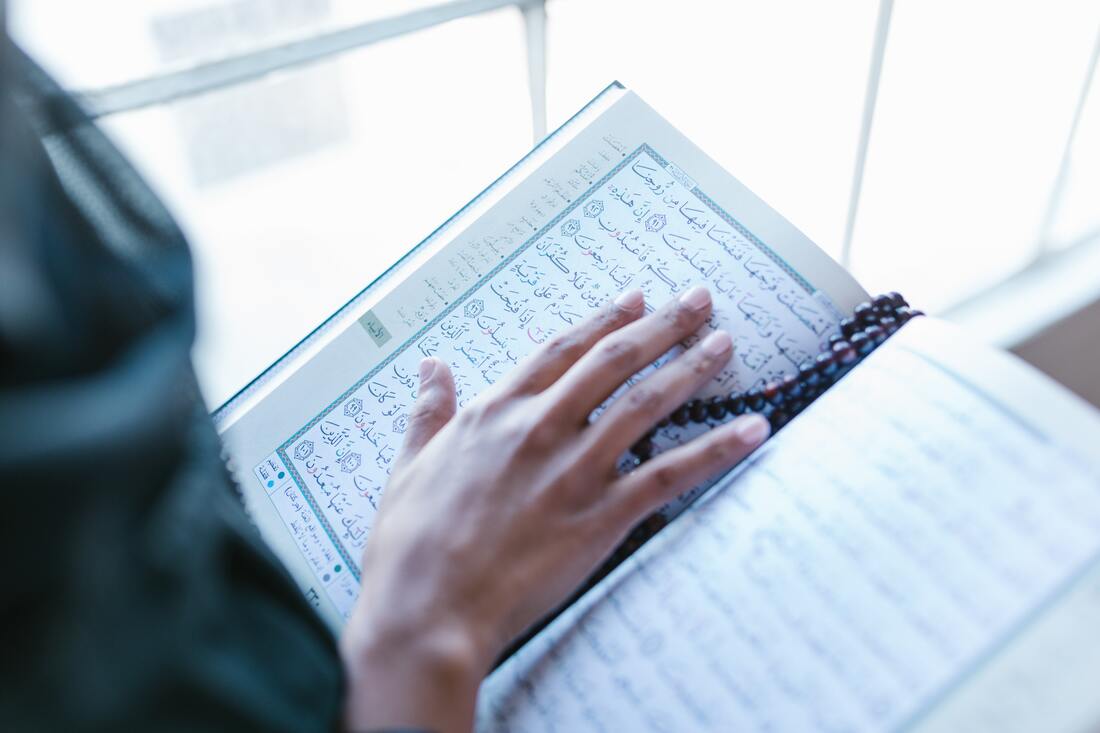
“Truly, the religion with Allah is Islam…” [3:19]
“If anyone desires a religion other than Islam, never will it be accepted of him; and in the Hereafter He will be in the ranks of those who have lost.” [3:85]
 
However, lest this assertion of Islam’s primacy as a teaching be used to justify either presumptuous self-congratulation or consigning others to Hell, the Qur’ān limits the knowledge of who is truly upon God’s religion to God Himself:

“Have you not seen those who claim sanctity for themselves? Nay-but Allah sanctifies whom He pleases and they will not be dealt with injustice…” [4:49]
“…Thus does Allah leave astray whom He wills and guides whom He wills. And none knows those who strive in the way of your Lord except Him…” [74:31]

In fact, an earlier community of believers was criticized for such presumptuous, exclusivist beliefs concerning salvation:

“Say ‘If the abode of the Hereafter with God is yours alone to the exclusion of other people, then long for death, if you are truthful.’ But they will never long for it, because of what their hands have sent forth, and God knows the wrongdoers.” [2:95-96]

Moreover or even more fundamentally, the phenomenon of nifāq or hypocrisy is explored thoroughly in the Qur’ān. A munāfiq or hypocrite is someone who outwardly professes belief but has an inward state of unfaith. On account of this severe dissonance, the munāfiq is said to occupy the lowest place in Hell (ad-dark al-asfal min an-nār). However, inasmuch as he or she continues to publicly acknowledge the prophethood of Muhammad (upon him be peace), membership within the Muslim community is never placed in jeopardy. “We have been commanded to judge on the basis of that which is apparent.” Attributed to the esteemed companion of the Prophet (upon him be peace), Umar ibn al-Khaṭṭāb, this statement beautifully expresses the conditional nature with which Muslims are able to declare anything about anyone’s spiritual reality or final destination.

This understanding seems to be fundamental to cautiousness around issues of takfīr (declaring someone who professes belief a disbeliever). However, within Muslim vernacular it doesn’t seem to exert the same effect on the manner in which we use and understand the term kāfir. A kāfir is someone who publicly expresses disbelief—or at the very least doesn’t express belief—in the Prophet (upon him be peace) but whose spiritual reality and ultimate end is the exclusive knowledge of God. Some within our community use the term kāfir as though they are assessing more than apparent non-membership within the Muslim community. They appraise souls. And in doing so, speak with an authority befitting God and God alone.
This creates myriad problems. In addition to a kind of spiritual dysmorphia by which one’s own reality is obscured—for if that kāfir can be consigned to Hell, this mu’min can be assured Heaven—it pushes Muslims who esteem pluralism and conviviality into a corner. In order to shut off a valve of toxic, misguided religious chauvinism they forgo any critique of disbelief (kufr) altogether. 

This is especially acute in Muslim spaces in which issues of social justice are being discussed. I find it quite interesting. We have no problem acknowledging that political freedom has an institutional nemesis called totalitarianism or fascism, or that gender equity has an institutional nemesis in patriarchy, or that sexual freedom has a nemesis in homophobia, etc. However, the notion that imān (faith) has an institutional nemesis referred to as kufr (disbelief) is conspicuously absent from that discourse. Perhaps this is a reaction to a prevailing culture of misguided religious exclusivism.

Nevertheless, if we subconsciously adopt an attitude which suggests that only propositions involving “justice”—as opposed to those involving belief—can be treated as axiomatic, we run the risk of our sensibilities being thoroughly calibrated to a secular worldview.    ​
Picture

about the author

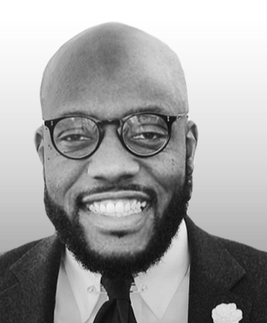
Ustadh Ubaydullah Evans is ALIM’s first Scholar-in-Residence.  He converted to Islam while in high school. Upon conversion, Ustadh Ubaydullah began studying some of the foundational books of Islam under the private tutelage of local scholars while simultaneously pursuing a degree in journalism from Columbia. Since then, he has studied at Chicagoland’s Institute of Islamic Education (IIE), in Tarim, Yemen, and Al-Azhar University in Cairo, Egypt, where he is the first African-American to graduate from its Shari’a program.

Ustadh Ubaydullah also instructs with the Ta’leef Collective and the Inner-City Muslim Action Network (IMAN) at times. As the ALIM Scholar-in-Residence, Ustadh Ubaydullah is a core instructor at the ALIM Summer Program. He teaches History of Islamic Law, Shama'il, and Aphorisims of Ibn Ata'illah along with other courses.Write something about yourself. No need to be fancy, just an overview.

0 Comments


Leave a Reply.

Join Our Mailing List

Get exclusive content and updates straight to your inbox.

By subscribing, you agree to receive occasional emails from ALIM. View terms.

 stay connected
​@alimprogram

Support ALIM
Summer Program
PO Box 871785 Canton, MI 48187
(734) 956-0698
2025 © American Learning Institute for Muslims. All rights reserved.
ALIM is a 501(c)(3) organization. All donations are tax deductible. Our EIN is 38-3633579.
Zelle: [email protected]
​
​Terms of Service | Privacy Guidelines
  • About
    • Our History
    • Board of Trustees
    • Team
    • Testimonials
  • In Person
    • ALIM Umrah Trip
    • ALIM Summer Program >
      • Register Now
      • Financial Aid
      • Confirmed Scholars
      • Course Descriptions
      • Testimonials
      • FAQ
      • Refer or Sponsor
      • Highlights
      • Photo Gallery
      • Sample Schedule
      • Welcome Packet
      • Facilitator Application
  • Virtual
    • Book Club
    • 2025 Online Winter Program
    • Istighfar & Tawbah Course
    • Navigating Post-Modernity >
      • Register
      • Register
    • Malcolm X
  • Media
    • FRAMES
    • Blog >
      • Ust. Ubaydullah Evans
      • Dr. Sherman Jackson
      • Dr. Muneer Fareed
      • Dr. Ali Sulaiman Ali
      • Reel Talk
    • YouTube
    • News
  • Scholars
    • Request a Scholar
    • ALIM Core Scholars >
      • Dr. Sherman Jackson
      • Dr. Muneer Fareed
      • Dr. Ali Sulaiman Ali
    • Scholar in Residence >
      • Ustadh Ubaydullah Evans
    • Guest Scholars >
      • Imam Mohamed Hag Magid
      • Dr. Hadia Mubarak
      • Mohammed Tayssir Safi
      • Usta. Zaynab Ansari
      • Imam Zaid Shakir
      • Dr. Umar Faruq Abd-Allah
      • Dr. Jawad Qureshi
      • Dr. Zainab Alwani
      • Ust. Shad Imam
      • Dr. Jonathan Brown
      • Dr. Ovamir Anjum
      • Dr. Omar Nasim
      • Dr. Omar Suleiman
      • Dr. Sulayman Nyang
      • Dr. Ingrid Mattson
      • Imam Dawud Walid
  • Contact
    • ​Alim Email Sign-Up
  • Support
    • Endowment Fund