American Learning Institute for Muslims
  • About
    • Our History
    • Board of Trustees
    • Team
    • Testimonials
  • In Person
    • ALIM Umrah Trip
    • ALIM Summer Program >
      • Register Now
      • Financial Aid
      • Confirmed Scholars
      • Course Descriptions
      • Testimonials
      • FAQ
      • Refer or Sponsor
      • Highlights
      • Photo Gallery
      • Sample Schedule
      • Welcome Packet
      • Facilitator Application
  • Virtual
    • Book Club
    • 2025 Online Winter Program
    • Istighfar & Tawbah Course
    • Navigating Post-Modernity >
      • Register
      • Register
    • Malcolm X
  • Media
    • FRAMES
    • Blog >
      • Ust. Ubaydullah Evans
      • Dr. Sherman Jackson
      • Dr. Muneer Fareed
      • Dr. Ali Sulaiman Ali
      • Reel Talk
    • YouTube
    • News
  • Scholars
    • Request a Scholar
    • ALIM Core Scholars >
      • Dr. Sherman Jackson
      • Dr. Muneer Fareed
      • Dr. Ali Sulaiman Ali
    • Scholar in Residence >
      • Ustadh Ubaydullah Evans
    • Guest Scholars >
      • Imam Mohamed Hag Magid
      • Dr. Hadia Mubarak
      • Mohammed Tayssir Safi
      • Usta. Zaynab Ansari
      • Imam Zaid Shakir
      • Dr. Umar Faruq Abd-Allah
      • Dr. Jawad Qureshi
      • Dr. Zainab Alwani
      • Ust. Shad Imam
      • Dr. Jonathan Brown
      • Dr. Ovamir Anjum
      • Dr. Omar Nasim
      • Dr. Omar Suleiman
      • Dr. Sulayman Nyang
      • Dr. Ingrid Mattson
      • Imam Dawud Walid
  • Contact
    • ​Alim Email Sign-Up
  • Support
    • Endowment Fund

Blog


A Deeper Thanksgiving

12/5/2023

1 Comment


By: Ustadh Ubaydullah Evans

ALIM Core Scholar, Scholar-in-Residence

Picture
One of the most insightful religious reflections I ever heard was mentioned by an atheist. During the Q and A that directly followed my lecture, a questioner from the audience rose to speak. He was a middle-aged white man of slender build, dressed in business casual (chinos and a plaid button down shirt) clothing, and wearing glasses. I got the sense that he was a member of the faculty at the small college at which I was presenting. After thanking me for my remarks, which, if I recall correctly, were about Islam and Post-Modernity or something like that, he sought my permission to venture slightly off topic and ask a ‘personal’ question. Not knowing what to I expect, I forced a laugh and said, “well, it depends how personal.” After granting him permission, he identified himself as “an atheist but a seeker,” he then said, “I thought your remarks about religion were balanced. I’m clear about your conviction but it didn’t appear that you were attempting to evangelize [sic] the audience. I feel compelled to ask, what is the most challenging aspect of being a person of faith in the modern age?” The question was pithy and I don’t think any non-Muslim had ever posed it to me in such direct fashion.
This wasn’t my dinner table, this was a stage. And the man wasn’t a Muslim that had grown weary of the rose-tinted, plastic idealism of religious scholars and instead wanted some emotional vulnerability and personal testimonial; he was a seeker who didn’t believe in God. In any other context, I probably would’ve disclosed some of my spending habits and the inadequate sensitivity to the suffering of others that allows me to spend money as I do. However, I knew he wanted something different. My mind raced, “c’mon, Ubayd. Say something brilliant, something edgy, something thoughtful.”

​I dug into the most honest place I could find in that moment and finally said, “Progress and moral evolution. I adhere to a 1400 year old tradition that contains both metaphysical and moral insights. Some of those moral insights are based on assumptions about things such as sexual propriety, the viability of warfare and violence, hierarchies among human beings (human bondage), etc. which have very different analogs among progressive thinkers today. I struggle to be true to my tradition in letter and spirit, while being critical of different modes of progressive thought, and affirming Islam’s commitment to alleviating human suffering.”


I don’t know what the heck that was but it was the best I could do! I laugh as I type this now because I can recall him looking at me confusedly and offering, “thank you.” My answer was underwhelming and I could tell that he hadn’t been sufficiently engaged so I turned the tables: “Now, may I ask you a similarly personal question?” He nodded in the affirmative so I continued, “What is the most challenging aspect of being an atheist in the modern age?” Touché! I caught him completely off guard and I appreciated the fact that I had—perhaps a little too much! The university campus has become a place that celebrates and promotes “atheisizing” and secularizing epistemologies in the same way religious communities celebrate faith. Except that while religious folks are usually candid about doubt and lapses of faith and “dark nights of the soul” and increasing and decreasing faith, non-religious folks tend to speak of unfaith as a singular source of clarity and liberation. He had to think. After a long pause, he poised himself and said, “Gratitude. I struggle with gratitude. I’ve been the beneficiary of such great privilege and good favor in my life and yet I don’t believe in anything to which I can attribute that favor. To call it merit is a lie. To call it luck is unsatisfying. And to act as though I don’t feel it is like being a psychopath. I honestly don’t know what to do…” 

I sat frozen. In fact, I think the whole room fell silent. It was one of the most honest things I’d ever heard anyone say. And there was no “storybook” ending. I didn’t grab the mic and talk about the Arabic term dīn (faith) and its etymological connection to the word dayn (debt). I didn’t share the Qur’anic verse in which Satan himself declares: {“Then I will come to them from the front and from the rear, and from their right and from their left. And You will not find most them thankful.”} [7:17] I didn’t even get a chance to thank him for opening a new window into my understanding of faith. He exited the auditorium before the conclusion of the session.

Just an imperfect and utterly human attempt at saying, “thank you.” This is the essence of faith. It makes sense then that the antonym of the Arabic term “kufr” (disbelief) is not imān or faith but rather “shukr” (gratitude). While a student at al-Azhar, I stumbled across Alister McGrath’s book In the Twilight of Atheism. The Oxfordian theologian investigated the Freudian claim that belief in God is an illusion based on an infantile need for a powerful father figure. In response, McGrath mused about Freud’s inability to view atheism through a similar lens. In other words, if belief is just the product of arrested human development, how should we understand disbelief? Perhaps disbelief is based on a similarly infantile need to feel autonomous—McGrath’s insight was particularly profound given Freud’s own writings concerning developmental psychology in children. Nonetheless, “illusory autonomy” or istighnā’ is a core Qur’ānic concept. In the first revelation received by the Prophet Muhammad (upon him be peace), the Almighty proclaims:

{“(1) Read! In the name of your Lord and Cherisher who created. (2) Created man out of a clot of congealed blood. (3) Read! And Your Lord is Most Bountiful. (4) He Who taught (the use of) the Pen. (5) Taught man that which he knew not. (6) Nay but man transgresses all bounds. (7) In that he looks upon himself as self-sufficient. (8) Indeed, unto your Lord is the return of all…”} [96: 1-8]
​
 
We are entirely contingent beings. Some time ago, Dr. Sherman Jackson provided me a thought-provoking insight. In paraphrase, he mentioned that we do ourselves a disservice by making God the point of departure when engaging secular thinkers. If we instead, he asserted, began with our indisputably shared experience of human contingency, we might clarify the basis of our faith more effectively. He gave an example: If someone expected one of their loved ones home by 9pm and hadn’t heard from them well past that, they might grow concerned. If such absence was uncharacteristic of the loved one, by 3 or 4am their anxiety would be heightened. In that moment, Dr. Jackson mentioned, some people will pray. Some others might pace nervously. Some will sweat profusely and bite their nails. Others might pour a stiff drink. Some might do all of the above! However, all of them, in that moment, realize their contingency. They all realize that the outcome required to return their peace of mind is not in their own hands. In that moment, self-sufficiency makes no promises. In other words, Dr. Jackson was saying that belief in God is but one of many possible responses to the anxiety that results from recognizing the limited control we ultimately exert over our existence.

​Not all choose to manage through faith in God but all must choose some means of managing. This unites us as human beings. When the beloved finally makes it home, safe, sound, and without incident, all are relieved. Faith, however, is embracing that nearly irrepressible impulse to say, “thank you,” and it’s incredibly satisfying. The questioner at the university was articulating the dilemma of having an innate sense of providence but not believing in God. That must be extremely difficult. We should be grateful that God has shown us how to be grateful.
Picture

About the author

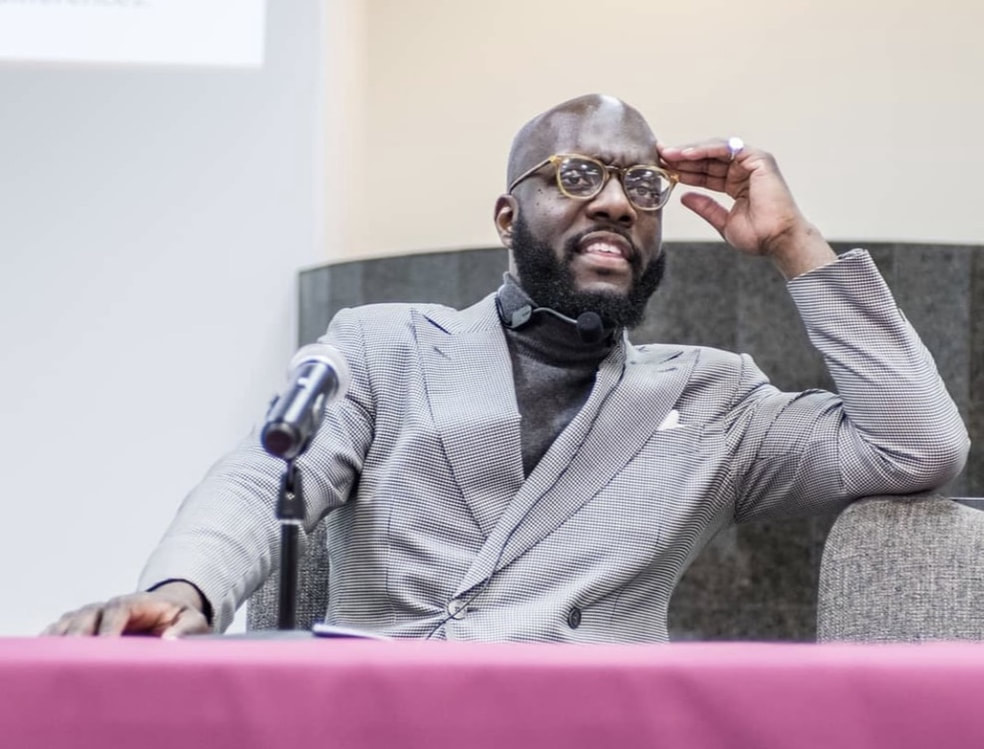
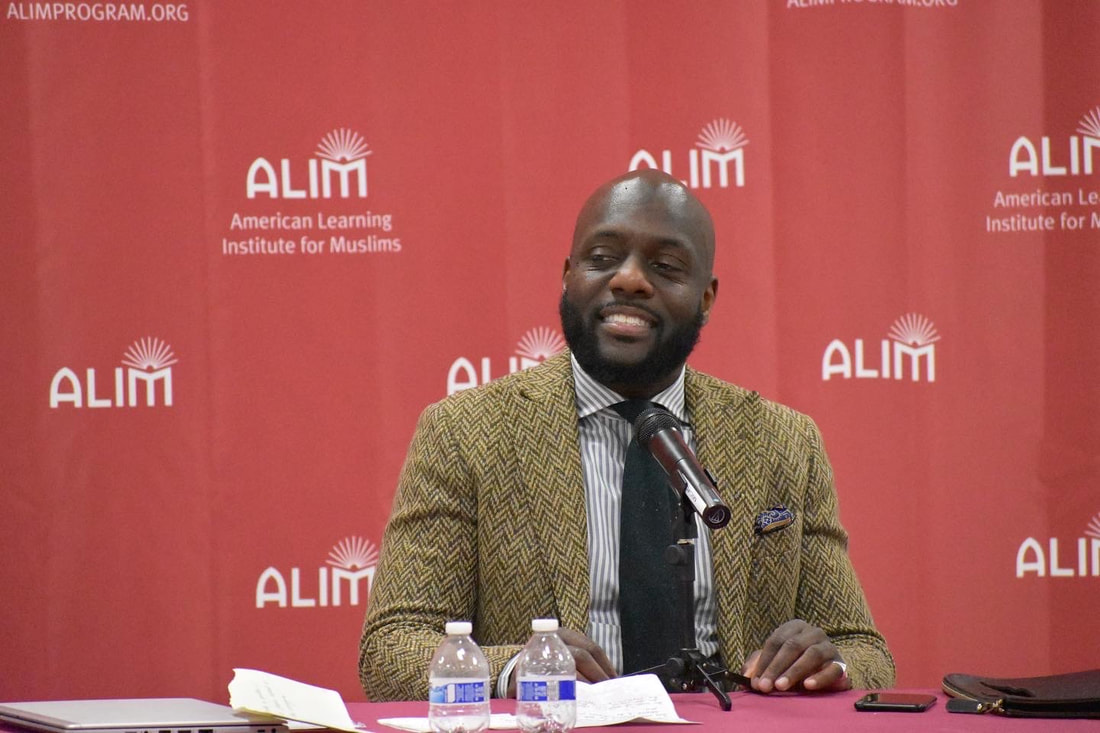
Ustadh Ubaydullah Evans is ALIM’s first Scholar-in-Residence. He converted to Islam while in high school. Upon conversion, Ustadh Ubaydullah began studying some of the foundational books of Islam under the private tutelage of local scholars while simultaneously pursuing a degree in journalism from Columbia.
Since then, he has studied at Chicagoland’s Institute of Islamic Education (IIE), in Tarim, Yemen, and Al-Azhar University in Cairo, Egypt, where he is the first African-American to graduate from its Shari’a program. Ustadh Ubaydullah also instructs with the Ta’leef Collective and the Inner-City Muslim Action Network (IMAN) at times.

As the ALIM Scholar-in-Residence, Ustadh Ubaydullah is a core instructor at the ALIM Summer Program. He teaches History of Islamic Law, Shama'il, and Aphorisims of Ibn Ata'illah along with other courses.
1 Comment

Chiquita S Williams
12/10/2023 03:24:39 am

MashaAllah, a beautiful and powerful essay!!! Kufr as an ingratitude vs. faithlessness! I got the chills!

Reply


Leave a Reply.

Join Our Mailing List

Get exclusive content and updates straight to your inbox.

By subscribing, you agree to receive occasional emails from ALIM. View terms.

 stay connected
​@alimprogram

Support ALIM
Summer Program
PO Box 871785 Canton, MI 48187
(734) 956-0698
2025 © American Learning Institute for Muslims. All rights reserved.
ALIM is a 501(c)(3) organization. All donations are tax deductible. Our EIN is 38-3633579.
Zelle: [email protected]
​
​Terms of Service | Privacy Guidelines
  • About
    • Our History
    • Board of Trustees
    • Team
    • Testimonials
  • In Person
    • ALIM Umrah Trip
    • ALIM Summer Program >
      • Register Now
      • Financial Aid
      • Confirmed Scholars
      • Course Descriptions
      • Testimonials
      • FAQ
      • Refer or Sponsor
      • Highlights
      • Photo Gallery
      • Sample Schedule
      • Welcome Packet
      • Facilitator Application
  • Virtual
    • Book Club
    • 2025 Online Winter Program
    • Istighfar & Tawbah Course
    • Navigating Post-Modernity >
      • Register
      • Register
    • Malcolm X
  • Media
    • FRAMES
    • Blog >
      • Ust. Ubaydullah Evans
      • Dr. Sherman Jackson
      • Dr. Muneer Fareed
      • Dr. Ali Sulaiman Ali
      • Reel Talk
    • YouTube
    • News
  • Scholars
    • Request a Scholar
    • ALIM Core Scholars >
      • Dr. Sherman Jackson
      • Dr. Muneer Fareed
      • Dr. Ali Sulaiman Ali
    • Scholar in Residence >
      • Ustadh Ubaydullah Evans
    • Guest Scholars >
      • Imam Mohamed Hag Magid
      • Dr. Hadia Mubarak
      • Mohammed Tayssir Safi
      • Usta. Zaynab Ansari
      • Imam Zaid Shakir
      • Dr. Umar Faruq Abd-Allah
      • Dr. Jawad Qureshi
      • Dr. Zainab Alwani
      • Ust. Shad Imam
      • Dr. Jonathan Brown
      • Dr. Ovamir Anjum
      • Dr. Omar Nasim
      • Dr. Omar Suleiman
      • Dr. Sulayman Nyang
      • Dr. Ingrid Mattson
      • Imam Dawud Walid
  • Contact
    • ​Alim Email Sign-Up
  • Support
    • Endowment Fund