American Learning Institute for Muslims
  • About
    • Our History
    • Board of Trustees
    • Team
    • Testimonials
  • In Person
    • ALIM Umrah Trip
    • ALIM Summer Program >
      • Register Now
      • Financial Aid
      • Confirmed Scholars
      • Course Descriptions
      • Testimonials
      • FAQ
      • Refer or Sponsor
      • Highlights
      • Photo Gallery
      • Sample Schedule
      • Welcome Packet
      • Facilitator Application
  • Virtual
    • Book Club
    • 2025 Online Winter Program
    • Istighfar & Tawbah Course
    • Navigating Post-Modernity >
      • Register
      • Register
    • Malcolm X
  • Media
    • FRAMES
    • Blog >
      • Ust. Ubaydullah Evans
      • Dr. Sherman Jackson
      • Dr. Muneer Fareed
      • Dr. Ali Sulaiman Ali
      • Reel Talk
    • YouTube
    • News
  • Scholars
    • Request a Scholar
    • ALIM Core Scholars >
      • Dr. Sherman Jackson
      • Dr. Muneer Fareed
      • Dr. Ali Sulaiman Ali
    • Scholar in Residence >
      • Ustadh Ubaydullah Evans
    • Guest Scholars >
      • Imam Mohamed Hag Magid
      • Dr. Hadia Mubarak
      • Mohammed Tayssir Safi
      • Usta. Zaynab Ansari
      • Imam Zaid Shakir
      • Dr. Umar Faruq Abd-Allah
      • Dr. Jawad Qureshi
      • Dr. Zainab Alwani
      • Ust. Shad Imam
      • Dr. Jonathan Brown
      • Dr. Ovamir Anjum
      • Dr. Omar Nasim
      • Dr. Omar Suleiman
      • Dr. Sulayman Nyang
      • Dr. Ingrid Mattson
      • Imam Dawud Walid
  • Contact
    • ​Alim Email Sign-Up
  • Support
    • Endowment Fund

Blog


A Bouquet for Keeping Hope Alive

5/10/2023

0 Comments


By: Ustadh Ubaydullah Evans 

ALIM Scholar-in-Residence

Picture
Recently, a dear friend sent me a link to an article about Hamtramck. The article highlighted the city council, which is comprised of all self-identified practicing Muslims, and the general population of the city which is also majority Muslim. The tone wasn’t alarmist, i.e. “The Shari’atization of America.” Nor was it an expression of Islamic triumphalism, i.e. “Hamtramck has become Dar al-Islam and Relocating there is a Religious Obligation.” Quite the reverse, the article struck me as relatively objective and expository. However, in covering some of the scenes of daily life there the journalist did select evocative descriptions of public Adhāns (call to prayer), veiled women, food carts, Arabic language billboards, etc. 
When I think about it, this probably would stir some nativist sentiment…but that’s a different post for a different day! Suffice it to say, the article seemed impartial—kind of…maybe. In any event, a reader who was presumably Iranian (because his handle included al-Esfahānī), commented: “That sounds like a horrible place. Imagine leaving what that religion did to our country and thinking it should be exported…”

Reading this hurt. Before I could sit with his comments, I became defensive. I criticized as illogical and ahistorical the tendency to attribute the failures of Muslim societies solely to Islam. I see in this great naiveté. Can secular dogmas which emphasize human rights and personal freedom restrain the tendency toward the despotic, draconian, and authoritarian in ways religious dogmas which emphasize Divine retribution cannot? Are democratic institutions led by fallible human beings impervious to the abuses of power non-democratic institutions are subject to—even though they’re led by the same human beings? The problem is not institutional religion. The problem is the human propensity toward injustice. In fact, a core Qur’anic teaching dictates that scripture itself can become a source of misguidance. If this is true for religion—within a religious worldview—how much more true for science, political philosophy, art, etc? Have we not seen all such fields of endeavor motivate, condone, aid, and provide a pretext for the worse kinds of human oppression? And somehow the answer is never to summarily trash those non-religious traditions but rather to benefit from their riches and avoid their harms.   
​

However, as my defensiveness began to give way, my curiosity was activated.  How much of our thoughts and opinions about any institution are primarily a reflection of our personal experience?  Consider what the less than enthusiastic reception of the COVID-19 vaccine within some Black communities revealed about the deep distrust many within our community harbor towards government and the pharmaceutical industry.  Are we simply to be dismissed as illogical, stupid, or held hostage by intemperate views? Or is our distrust the source of real intergenerational systemic abuse? This history would need to be reckoned with in a substantive way before any fair assessment of a value proposition could take place—be it Islam or the COVID vaccine. In the case of the vaccine and related social phenomena, I readily cite the challenge of rebuilding trust. In the case of Islam, a faith tradition to which I’m so deeply indebted, I don’t think I’ve allowed myself to see it. Some people have identified relinquishing Islam as fundamental to their political freedom and personal happiness. And they have not done this without reason.

How fortunate are we then?  We have the opportunity to craft an expression of Islam that is not consonant with tyranny but rather a source of resistance to it. The exponent of Islam we’re cultivating appeals to the personal spiritual aspirations of its adherents. Our ability to appeal to social conformity or historical continuity is comparatively limited. Within many segments of our community, we actively encourage artists to vivify us by pushing the boundaries of their creative visions to the permissible edge. Comparatively, stifling spontaneous creativity in the name of preserving a cultural orthodoxy from the encroachment of the West contains little promise for us. I’ve lived among majority-Muslim populations in which impassioned commitment to Islam was characterized as the last hopeless refuge of the poor, weak, and dispossessed. This expression of faith was deemed wholly unsuitable for the capable, educated, accomplished, and ambitious. And I’ve also visited communities in which deep commitment to Islam was met with skepticism. This expression of Islam was viewed as little more than a justification for preserving the status quo. It elevates a handful of elites who look among the people with paternalistic contempt and cover their oppression in superficial ritual observance. How fortunate are we to have an opportunity to develop a communal ethic which honors the resilience, striving, and sacrifice of materially under-resourced, marginalized communities? And at the same time, we can produce communities that enjoy the support of an upwardly-mobile, resourceful, influential tier. And perhaps more importantly, we can aspire to bring those segments of our community together in unprecedented and inspiring ways which seek to serve our most vulnerable. This is aspirational for us. I certainly don’t intend to convey that this is my experience of our community. The occasional glimpse at possibility has been enough to keep cynicism and self-defeatism at bay. 
                        

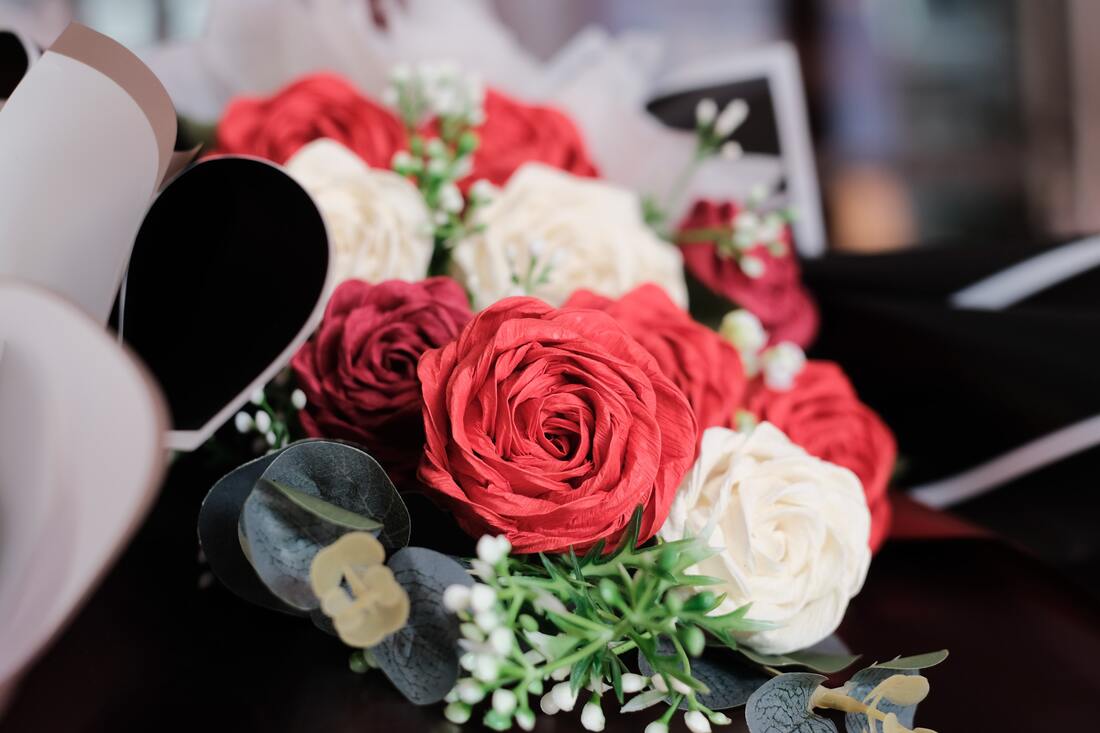
Agitation is understood by many to be the epitome of public intellectual life. See someone committed to the public intellectual vocation, and you see someone critiquing or taking umbrage with something…all the time: The community is racist. The community is misogynistic. The community is patriarchal. The community is ignorant. The community aspires to middle-class suburban whiteness. The community has not been able to produce an ethic that empowers urban Black people to escape the most egregious pathologies of the inner-city. “Yesterday I heard a Muslim say that something was ‘just’ Sunnah. ‘Just Sunnah!’ That’s our problem…” And I could list more. I’ve heard them all. And if I’m being honest, I’ve heard them all from people I’m absolutely convinced love Allah and His Messenger (upon him be peace). The critique I agree with and that which I don’t; I think each of them is trying to help our community approximate its mission of representing the Messenger of God (upon him peace). However, I’d like to invite us all to pause for a minute, to descend those bully pulpits, and give our Muslim community some flowers. We’re all still agitating because somewhere, perhaps buried deep within us, is some hope in this community.        
Picture

About the Author

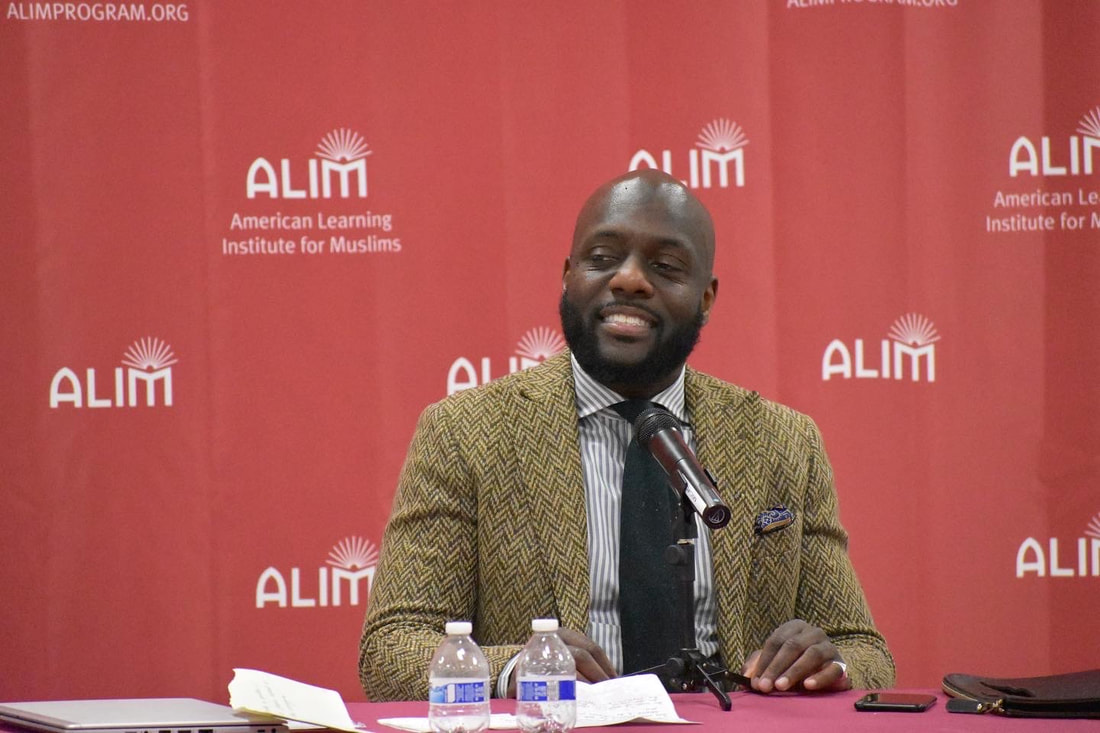
Ustadh Ubaydullah Evans is ALIM’s first Scholar-in-Residence. He converted to Islam while in high school. Upon conversion, Ustadh Ubaydullah began studying some of the foundational books of Islam under the private tutelage of local scholars while simultaneously pursuing a degree in journalism from Columbia.

Since then, he has studied at Chicagoland’s Institute of Islamic Education (IIE), in Tarim, Yemen, and Al-Azhar University in Cairo, Egypt, where he is the first African-American to graduate from its Shari’a program. Ustadh Ubaydullah also instructs with the Ta’leef Collective and the Inner-City Muslim Action Network (IMAN) at times. 

​
As the ALIM Scholar-in-Residence, Ustadh Ubaydullah is a core instructor at the ALIM Summer Program. He teaches History of Islamic Law, Shama'il, and Aphorisims of Ibn Ata'illah along with other courses.
0 Comments


Leave a Reply.

Join Our Mailing List

Get exclusive content and updates straight to your inbox.

By subscribing, you agree to receive occasional emails from ALIM. View terms.

 stay connected
​@alimprogram

Support ALIM
Summer Program
PO Box 871785 Canton, MI 48187
(734) 956-0698
2025 © American Learning Institute for Muslims. All rights reserved.
ALIM is a 501(c)(3) organization. All donations are tax deductible. Our EIN is 38-3633579.
Zelle: [email protected]
​
​Terms of Service | Privacy Guidelines
  • About
    • Our History
    • Board of Trustees
    • Team
    • Testimonials
  • In Person
    • ALIM Umrah Trip
    • ALIM Summer Program >
      • Register Now
      • Financial Aid
      • Confirmed Scholars
      • Course Descriptions
      • Testimonials
      • FAQ
      • Refer or Sponsor
      • Highlights
      • Photo Gallery
      • Sample Schedule
      • Welcome Packet
      • Facilitator Application
  • Virtual
    • Book Club
    • 2025 Online Winter Program
    • Istighfar & Tawbah Course
    • Navigating Post-Modernity >
      • Register
      • Register
    • Malcolm X
  • Media
    • FRAMES
    • Blog >
      • Ust. Ubaydullah Evans
      • Dr. Sherman Jackson
      • Dr. Muneer Fareed
      • Dr. Ali Sulaiman Ali
      • Reel Talk
    • YouTube
    • News
  • Scholars
    • Request a Scholar
    • ALIM Core Scholars >
      • Dr. Sherman Jackson
      • Dr. Muneer Fareed
      • Dr. Ali Sulaiman Ali
    • Scholar in Residence >
      • Ustadh Ubaydullah Evans
    • Guest Scholars >
      • Imam Mohamed Hag Magid
      • Dr. Hadia Mubarak
      • Mohammed Tayssir Safi
      • Usta. Zaynab Ansari
      • Imam Zaid Shakir
      • Dr. Umar Faruq Abd-Allah
      • Dr. Jawad Qureshi
      • Dr. Zainab Alwani
      • Ust. Shad Imam
      • Dr. Jonathan Brown
      • Dr. Ovamir Anjum
      • Dr. Omar Nasim
      • Dr. Omar Suleiman
      • Dr. Sulayman Nyang
      • Dr. Ingrid Mattson
      • Imam Dawud Walid
  • Contact
    • ​Alim Email Sign-Up
  • Support
    • Endowment Fund