 My wife Hadiyah is creative. When she recognized that our eldest daughter Aasiyah was approaching her thirteenth birthday, she started planning a “coming of age” party. Part debutante ball, part “bat mitzvah”; it’s an original vision. As a new teen, Hadiyah contends, Aasiyah should be introduced to her “village” and celebrated as she assumes responsibility (taklīf) for her religious obligations. I’m fascinated by my wife’s vision: a party that occasions “coming of age”, in which taklīf would be a central theme. What exactly would we be celebrating? Seeing as though legal adulthood or majority begins at the age of 18 in most states, does the concept of adolescence militate against an embrace of taklīf? And lastly, with the spotlight recently placed on statutory rape, does our commitment to taklīf dictate any specific intervention we might make in order to prepare our young people?
1 Comment
 When Nelson Mandela described himself as “something of an Anglophile” it relieved some tension. Somehow this celebrated freedom-fighter openly admitting his affinity for English culture made my comparatively mild curiosity a little less damning. And so there I was: A poor student travelling to Cairo via London. Upon arriving at Heathrow, I made my way through the labyrinthine line at the gate until I reached the agent. With an earnestness conveyed by sheer audacity and a pitiful carry-on stuffed to nearly twice its regular capacity, I humbly requested that British Airways rebook my connection the following day so that I could explore London. And to my suprise the agent obliged!
 Listen to this thought provoking podcast on Al-Madina Institute’s IMANwire podcast featuring Ust. Ubaydullah Evans; ALIM’s Scholar in Residence. Topic: “American Islam: Cultural Imitators or Innovators?rdquo;
These are the types of discussions that highlight the ALIM Summer Program. For more information, see the links below.  For many, husn adh-dhann or having a good opinion of others is amorphous. A simple willingness to offer the benefit of the doubt or a “get out of jail free” card which grants immunity in the face of wrongdoing? In our scandal-laden cultural moment, in which the enhanced ability to share news, warnings, rumors, and outright lies about people–some of whom we’ve never even met–is literally at our fingertips, a cursory glance at husn adh-dhann might be helpful.
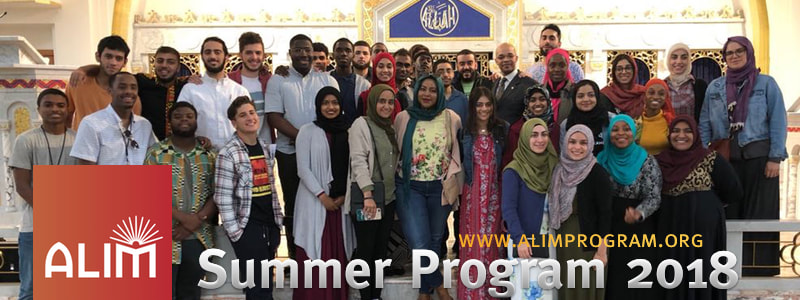 As a signifier of commitment to progressive values, the terms “diversity and inclusion” are nearly ubiquitous. The past decade or so has witnessed “diversity and inclusion” move from the Affirmative Action inspired charters of schools and businesses to a vibrant part of our media, art, and vernacular cultures. Put differently, we no longer only expect diversity and inclusion where we work or study; it’s something we’ve come to seek more broadly. Taken at face value, this shift toward plurality should inspire American Muslims with great satisfaction. Our faith affords inter- religious/cultural exchange and ultimately familiarity, spiritual value. The Qur’ān proclaims,
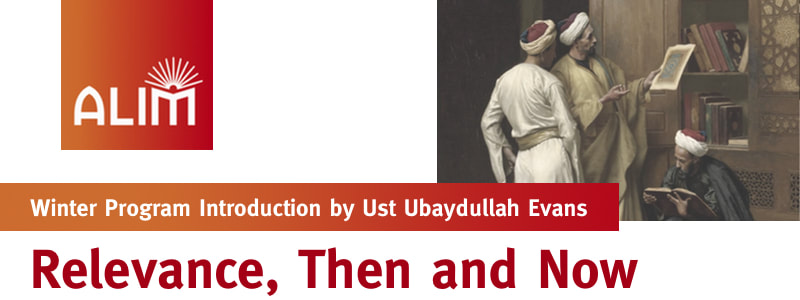 Relevance is an important factor when assessing authority within religious communities. However, in the case of Sunni Islam it possesses added significance: In the absence of centralized, religiously binding authority (e.g. the Catholic Church) relevance can quickly become the sine qua non of religious authority. For many, pedigree and certification become meaningless if the authority in question is deemed “out of touch.”
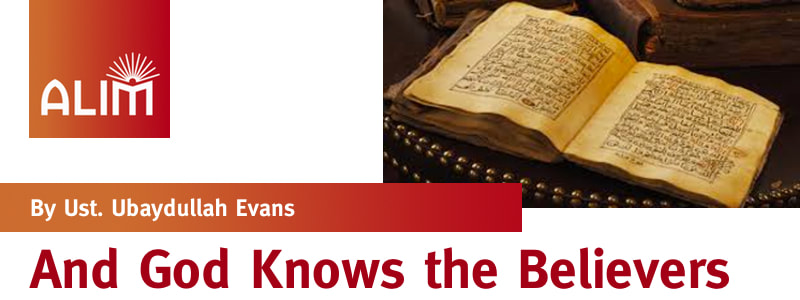 I don’t use the word kāfir; well, at least not in public. My particular grasp of the term notwithstanding, the risk its user assumes of being regarded a bad neighbor is simply too great for me. Indeed, this word has come to represent much of what both American Muslims and non-Muslims find unsettling about public religion: intolerance and chauvinism.
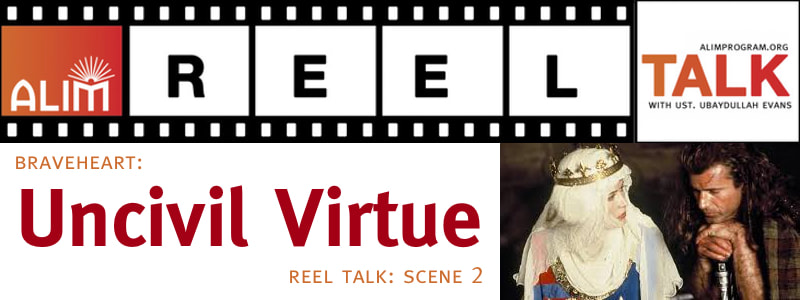 I often find that the extent to which I can enjoy or be inspired by a film depends on my ability to work through any cynicism I might feel toward its producers. Braveheart, the 1995 epic war thriller starring—then less embattled—actor Mel Gibson is quite possibly one of the most historically inaccurate films ever made. The kind of exaggeration that paints real-life Scottish war hero Sir William Wallace as a kind of primus inter pares, nationalist guerilla that seduces English queen consort Isabella while fighting for his country’s independence would be laughable if it weren’t so over-used. A historically revised European hero whose exploits are overblown; hmm, where have we seen this before? Nonetheless, be the lack of historicity and exaggerated claims of heroism what they may, midway through Braveheart there is an unforgettable scene:
 Our New Blog & Video-Blog Series
“Mish mumkin li wāhid amrīkī an ya’īsha bidūn al-aflām!” The quotation above, transliterated from semi-colloquial Egyptian Arabic, reads “It’s impossible for an American to live without movies!” Offered by a professor at al-Azhar University in response to an American student’s question about the permissibility of watching movies; the statement was at once facetious and insightful. Although the professor was clearly poking fun at the American obsession with Hollywood, he was also offering a lesson in legal realism or fiqh al-wāqi’. In other words, he was saying, is there really any consequence to how I respond to this question; no matter what I say you’re going to watch movies! 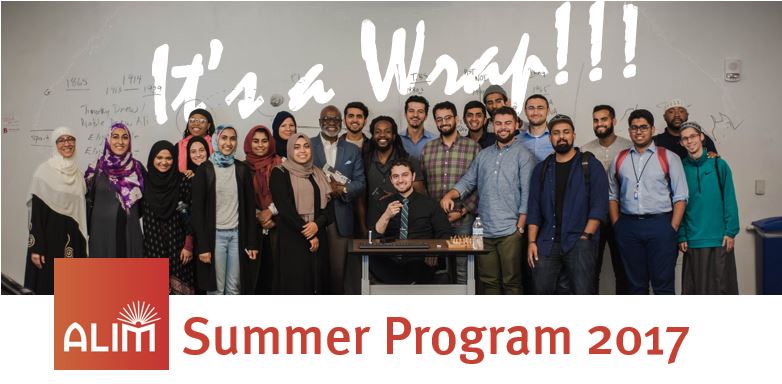 Actual happiness always looks pretty squalid in comparison with the over compensations for misery.—Aldous Huxley, Brave New World Alhamdu lillah, we just capped off the 18th consecutive year of the ALIM Summer Program and I must say; I think we did it again! I’d like to express my heartfelt appreciation for the countless sacrifices of the volunteers, ALIM administrative staff, students, families, communities, and teachers, which made this effort possible.
 Let’s face it; it’s about being hungry. In spite of much insightful commentary on prayer and connection to the Qur’an being the true purpose of the holy month, in our minds, and if not, certainly in our stomachs, hunger remains the most salient feature of Ramadan: “Believers, fasting has been prescribed for you as it was prescribed for those before you, so that you may have fear of God.” {2:183} In consonance with this verse, the significance of fasting has always been understood among Muslims: Voluntary self-denial out of devotion to God. If we can successfully abstain from that which is not merely permissible but essential (food and drink) in obedience to God, abstaining from the impermissible and even the questionable should be comparatively easy. Considering hunger during the days of Ramadan, both popular preaching and the bulk of Muslim scholarly writing on the subject tend to focus on patience and sincerity. These core Islamic values are correctly identified as the fruit of a successful Ramadan. Nonetheless, the seed; that visceral feeling of hunger we experience while fasting, in and of itself, may also contain profound lessons.
 Ilm al-Kalām, the term applied to theology in classical Islam, occupies an interesting place in our history. Much more than law (fiqh), its intellectual counterpart, theology became the focus of the nascent Islamic civilization’s conversation with the world around it. The term itself, which literally translates as “talk-ology,” carried with it mild sarcasm owing to the fact that it tended to produce tedious dialectic and excessive amounts of technical jargon. Although it’s difficult to imagine, addressing the terms “tawḥīd” (Divine Oneness) or “`aqīdah” (creed) to one of the Companions of the Prophet (upon him be peace) would likely have drawn blank stares. As a community which pre-dated the development of discursive theology and its distinct vernacular, these terms and the discourse which gave them meaning simply weren’t a part of their religious experience.
 I still remember my first encounter with Shaykh Hamza Yusuf. I was an 18yr old newly-minted convert attending a Nawawi Foundation event in Chicago. Initially unsure of what to expect, I sat spellbound; absorbed in an absolutely riveting lecture. In addition to his deep erudition, which somehow blended quotations from Rāghib al-Isfahānī, Neil Postman, and Bob Dylan, I found the stream-of-consciousness style with which he effortlessly moved through his talking points artistically inspiring. It was like listening to the virtuosity of Charlie Parker or Dizzy Gillespie but then he hit a sour note. Discussing the cultural decadence of America—which I later learned was a favorite topic of his—he preached: “what happened to us? We were once a people of eloquence and brilliant rhetoric. Many of our young people can barely form cogent sentences now. The other day I was attempting to engage one in conversation and he looked at me and responded, [insert: oafish shoulder shrug and incomprehensible gibberish]. And I said ‘What!’ I don’t know what you’re saying, young man! I don’t speak hip hop!”
In Ustadh Ubaydullah Evans’ Ramadan Reflection, he talks about the beauty of how Ramadan forces us to focus on purifying our souls..
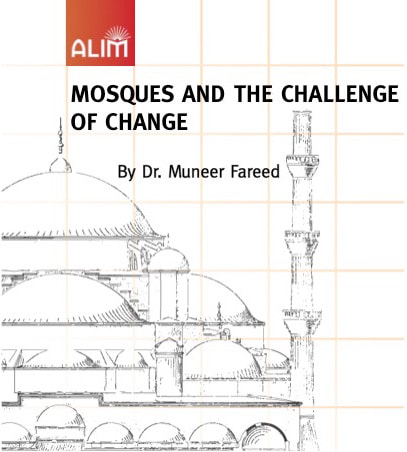 Mosques in America today, not unlike those in Muslim history, continue the struggle to balance communal inclusivity with ritual orthodoxy. That this struggle has defined the function of the mosque since its very inception is lost on those who see mosques as spiritual retreats. As the evidence presented hereunder suggests, intermittent campaigns for uniformity—of ideas, dogmas, and rituals—often militate, not just against the establishment of the mosque as a restful retreat, but also as the nexus of a pluralistic community.
Beyond pamphlets, ALIM’s Scholar in Residence Ustadh Ubaydullah discusses how Ramadan and Eid provide a rich opportunity for personal dawah through engaging people around values that are already esteemed such as self discipline and self restraint.
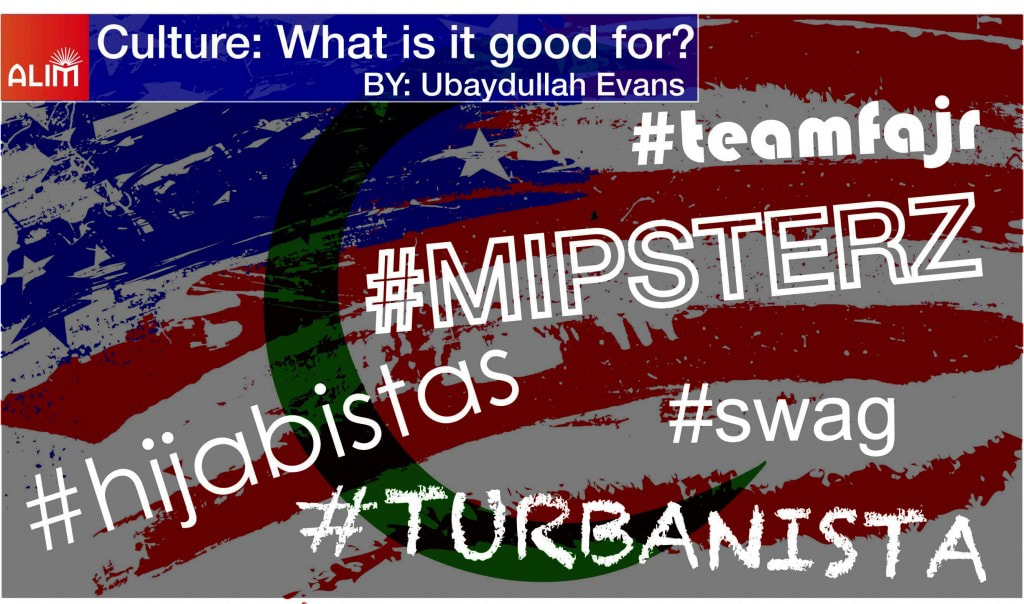 Of all there is to lament about popular discourse in the Muslim community, the most glaring is perhaps its predictability. As a friend once offered during a moment of near lyric poignancy, “If you can get down the ‘3 M’s’; music, moons, and meat, you’ve encompassed two-thirds of what Muslims discuss within their community forums! Of course, he was being facetious; nevertheless, his assessment was accurate. A good deal of our collective mental energies are expended on a handful of shopworn, hackneyed arguments. In an admittedly somewhat cynical move, I’ve actually adopted a bit of a ‘controversy calendar.’ It begins in the earlier part of the year with the Eid Milād an-Nabī (The Celebration of the Prophet’s birthday), surges to mid-year with the commencement of Ramadān and Shawwāl, and ends with the celebration of holidays. Ironically, as the conversation at the grassroots remains suspended in a painful rendition of ‘Groundhog Day’, our community also boasts a burgeoning group of creative and intellectually exciting academicians, classically trained scholars, and other thought-leaders. The perennial problems, however, have been accessibility and relevance. With that in mind, I was pleasantly surprised to discover that a jazzy swing-inspired musical track, Jay-Z’s normal mixture of nouveau-riche boast/social commentary and a group of young chic Muslim women could do something the traditional appurtenances of intellectual life—books, articles, and lectures—couldn’t: Instigate some fresh conversations among Muslims.
As an attendee of the 2005 Summer Program, ALIM played a significant role in this Al-Azhar graduate’s path in Islam. Watch Ustadh Ubaydullah Evans talk about his upbringing, interesting relationship with clothing, and love for knowledge.
|

stay connected
@alimprogram
PO Box 871785 Canton, MI 48187
(734) 956-0698
(734) 956-0698
2026 © American Learning Institute for Muslims. All rights reserved.
ALIM is a 501(c)(3) organization. All donations are tax deductible. Our EIN is 38-3633579.
Zelle: [email protected]
Terms of Service | Privacy Guidelines
ALIM is a 501(c)(3) organization. All donations are tax deductible. Our EIN is 38-3633579.
Zelle: [email protected]
Terms of Service | Privacy Guidelines