By: Ustadh Ubaydullah Evans I have always maintained that our context makes a full embrace of the Prophet Muhammad (upon him be peace) difficult. Within our sacred history, Jesus Christ of Nazareth (upon him and his blessed mother be peace) is the direct predecessor of the Prophet Muhammad (upon him be peace). Relative chronological proximity as well as being the central religious figures of the two largest religious communities in the world have linked inextricably the Christ and the Prophet (upon them be peace). When prophethood is understood as a continuous process, beginning with Adam and culminating in the Prophet, the differences between the various Prophets of God (upon them be peace) are appreciated as alternations in form but not essence. In fact, speaking of Jesus and the Prophet Muhammad (upon them be peace), their lives and respective ministries, offer the perfect complement to one another. But where the wise see connection and harmony, those with less expansive understandings see contradiction and sometimes (due to being chronologically later) attribute inauthenticity to the Prophet Muhammad (upon him be peace). Thus, the Prophet has been misunderstood among many Americans. In my estimation, this is not because any single aspect of his life is demonstrably out of favor among modern Americans. Rather, the towering influence of Jesus (upon him be peace) has so effectively colored the religious and social imaginary of Europe—and by extension America—that Prophet Muhammad (upon him be peace) is mostly judged as an ersatz Jesus (upon him be peace). There is certainly a better way to understand the Prophet (upon him be peace). Whenever the Prophet (upon him be peace) is evaluated and understood on his own merit, our neighbors of other faiths (or no faith at all) find greater appreciation for his life and teachings.
0 Comments
By: ustadh ubaydullah evans In his seminal work on Islamic history, Conversion to Islam in the Medieval Period: An Essay in Quantitative History, Prof. Richard Bulliet makes a startling assertion: During some of the most fecund periods of Islamic history (the period sometimes romantically referred to as the “Golden Age” of Islamic civilization), Muslims were a religious minority within some of the central lands of Islam. Moreover, what we term classical “Islamic” civilization was in fact built by Jews, Christians, Zoroastrians, and Hellenistic philosophers inter alia. Stated more directly, Islam thrived in pluralistic societies. It had to define itself vis-à-vis traditions that were historically more established and numerically stronger. And yet, when considering our minority status in the US we hardly draw inspiration or even parallels from Muslim activity during that period. Why not? As opposed to seeing ourselves on the cusp of a renaissance, our community appears to harbor fears of being dissolved into the dominant culture. What can be said to account for this? More importantly, can this trend be reversed or at the very least staunched?
by: ustadh ubaydullah evans Calibrate: verb/ cal.i.brate/ `ka-lǝ-brāt/to adjust precisely for a particular function.
I don’t use the word kāfir; well, at least not in public. My particular grasp of the term notwithstanding, the risk its user assumes of being regarded a bad neighbor is simply too great for me. Indeed, this word has come to represent much of what both American Muslims and non-Muslims find unsettling about public religion: Intolerance and chauvinism. Salvific exclusivism is the idea that the adherents of only one religion will attain salvation in the Hereafter. Although I’ve neither conducted nor read any empirical research on the matter, anecdotally I can reference a number of stories in which Muslims (particularly millennials) expressed strong opposition to Islamic salvific exclusivism. “What about saints like Mother Teresa, freedom fighters like Martin Luther King Jr, and good people like my best friend—how can they go to Hell?” Each time I hear this I’m taken aback by the directness of the question itself. Where does the presumption that an Islamic understanding of exclusivism does, in fact, consign Mother Teresa, Martin King Jr., and their best friend to Hell come from? by: ustadh ubaydullah evans By: Ustadh Ubaydullah evansRelevance is an important factor when assessing authority within religious communities. However, in the case of Sunni Islam it possesses added significance: In the absence of centralized, religiously binding authority (e.g. the Catholic Church) relevance can quickly become the sine qua non of religious authority. For many, pedigree and certification become meaningless if the authority in question is deemed “out of touch.”
With no divinely sanctioned body to confer authority upon them; historically, the scholars of Islam won positions of influence through a combination of ascendance within institutions whose source of authority was meritocratic rather than divine and personal charisma and forcefulness. With regard to the latter, it was the endorsement of the ‘people’ that raised a scholar from obscurity and gave their words weight. Unsurprisingly, not being “out of touch” was key in earning that endorsement. That a scholar deployed the correct religious language, embodied an ethic of conscientiousness (marūwwa or futūwwa), and that he or she at least appeared to retain a popular religious outlook all presumably contributed to their relevance and by extension authority. As Dr. Umar Faruq Abd Allah brilliantly put it: “Ijtihād (critical and analytical deduction) from the texts (i.e the Qur’ān and ḥadīth) was reserved for the scholars but ijtihād of the scholars has always been for everyone.” By: Ustadh Ubaydullah EvansALIM’s first Scholar-in-Residence.  Admittedly, I didn’t grow up attending a mosque under the umbrella of the Islamic Society of North America (ISNA). I didn’t have a subscription to Islamic Horizons, the once thriving bi-monthly magazine of ISNA. And while I was familiar with some of the leadership of ISNA (Sheikh Mohammed Nur Abdullah, Muzzammil Siddiqi, Dr. Ingrid Mattson, and of course, our very own, Dr. Muneer Fareed) for me, the relevance of ISNA was never an extension of its leaders. For many, The Islamic Society of North America was an organization identified by one thing and one thing only: The annual convention. In fact, when my friends and I said “ISNA” we were only referring to the convention. As such, being invited as a speaker for the 59th annual ISNA convention which took place in my hometown Chicagoland community, I graciously and enthusiastically accepted.
By: Ustadh Ubaydullah evans In his esteemed collection of rigorously authenticated Prophetic traditions, Imam al-Bukhārī records the statement of the Prophet (upon him be peace): "The best deeds in the sight of God are those that are performed with the greatest consistency.”
The American Learning Institute for Muslims (ALIM) has been hosting its annual summer program for over two decades. And although much has changed in nearly a quarter century, ALIM has consistently delivered on its mission of empowering Muslims through Islamic literacy. Our students have been consistently excellent; bringing with them a diverse range of experiences and areas of expertise which enhance exchange in the classroom. By: Ustadh Ubaydullah Evans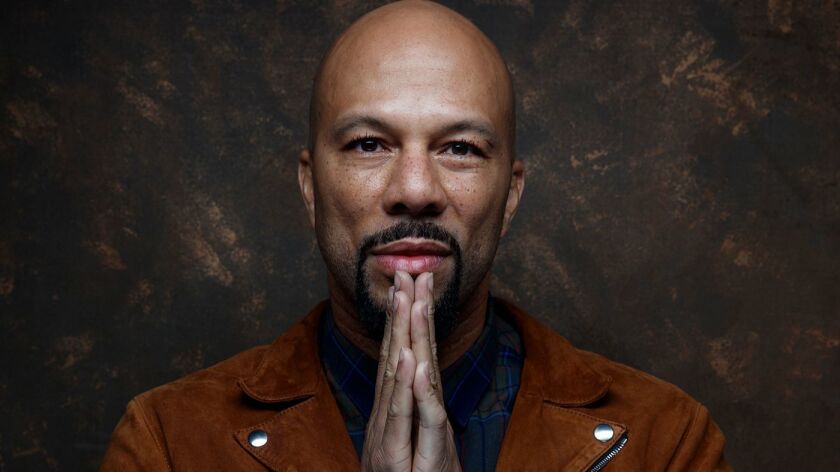 Actor and American hip-hop musician Common (Jay L. Clendenin / Los Angeles Times) Grammy and Oscar award-winning rapper Common released the song “Retrospect for Life” in 1996. The song, which featured production from fellow Chicago legend, No I.D., a lush musical sample from the inestimable Stevie Wonder and vocals from a then ascending Lauryn Hill, was an instant classic. Offering a rare glimpse of a Black male perspective on abortion, the artist introspectively begins:
By Ustadh Ubaydullah evans Photograph by Stephanie Strasburg / Pittsburgh Post-Gazette AP Why did one straw break the camel’s back? / Here’s the secret/ the million other straws underneath it/ it’s all mathematics —Yasiin Bey (Mos Def).
Islamic law predates the creation of the modern nation-state. As such, the kind of legal monism (idea of there being a single “law of the land”) and centralization of power enjoyed by modern nations was unfathomable to Muslim political theorists in the classical period. By comparison, theirs was an ethic of non-domination and personal liberty vis-à-vis the State—at least with regard to a matter like the right to bear arms. Interestingly enough, it appears that this incidental feature of the pre-modern world (non-domination vis-à-vis the State) is an intentional moral commitment for those who refuse to countenance any nullification of their 2nd Amendment rights. However, our tradition subjects all moral commitments to an assessment of their impact on the Maqāṣid (objectives) of the Shari’ah. The preservation of: Faith, life, family, human cognitive ability, wealth, and dignity. Stated differently, where the will of God is concerned, no moral commitment that can be shown to harm or jeopardize the aforementioned values can be regarded as sound. By Ustadh ubaydullah evans Photograph by Blaine Ohigashi / The New Yorker “I was once riding behind the Prophet (upon him be peace) and I recited to him one hundred couplets from the poetry of Umayyah ibn Abī aṣ-Ṣalt al-Thaqafī. Each time I recited a couplet, the Prophet (upon him be peace) would say to me, “Recite more!” until I recited one hundred couplets, whereupon the Prophet said, ‘He nearly embraced Islam.’”
By now, it appears the whole world knows that Will Smith assaulted Chris Rock during the live broadcast of the Oscars. And if it weren’t for one of the most strenuous branding campaigns in modern show business, the public might have taken the unfortunate incident at face value: Will Smith lost control over his emotions and unjustly slapped Chris Rock for an ill-conceived joke. However, in the process of building a multi-media empire, the Smiths have opened intimate and sometimes unsettling details about their personal lives. As a result, social commentary on the incident has framed Will Smith as everything from a vengeful cuckold trying to reassert his masculinity to a tutored soul, reliving the trauma of watching his mother suffer domestic violence. The carousel of public opinion continues to spin: biting, satirical, pseudo-therapeutic but very rarely introspective. For the Muslim community, I see two issues of interest here. First, should we even care about this? Does concern about what happened between Will Smith and Chris Rock represent an unjustifiable descent into the inane and vulgar? Secondly, as opposed to either aimless schadenfreude or psychological quackery, is there anything we can learn about ourselves and our tradition from this incident? Ustadh Ubaydullah Evans For better or worse, meritocracy shapes many of our ideals concerning achievement. On the one hand, as the famed Ibn Khaldūn summarized in his Muqaddimah: The work ethic of a people is strongest when the fruits of their labor are safe from the reach of government usurpation. Simply put, when people believe that hard work results in success, they work hard. This is meritocracy at its commendable best. On the other hand, an overemphasis on meritocracy may have the effect of minimizing the role of providence in success. Moreover, when success, and by extension prosperity, are separated from the Divine prerogative they are no longer embraced as tests and responsibilities. Quite the reverse, in the absence of an intentional acknowledgment of God’s favor, achievement—more than even appearance, talent, or status—can become a great source of delusion and ingratitude. If our individual worthiness, dedication, or ability has secured for us what we have, how do we view those who haven’t achieved as much? Are they definitively less worthy, unintelligent, or lazy? The Prophet (upon him be peace) said: “Whoever has an atom’s weight of arrogance in his/her heart will not enter Paradise.” Upon hearing this, one of the companions asked, “God’s Messenger! But a man may take pride in his appearance; this is an expression of arrogance?” The Prophet (upon him be peace) continued, “Indeed, God is beautiful and He loves beauty. Arrogance, however, is expressed in the wanton rejection of truth and looking at people with contempt.” The spiritual consequences of arrogance are indeed grave. Fortunately, God offers us a very expedient and effective way of reducing our susceptibility to it. Thanks and giving or ash-shukr and aṣ-ṣadaqa: Gratitude and charity are universally cited as foundational for a good life. For Americans and our often naïve beliefs around meritocracy; inundated with rags to riches stories and biographies which capture the heroic journeys of our cultural heroes, the need for these is even more immediate. The Islamic tradition is replete with conceptual frameworks which vivify the ideals of thanks and giving. In consonance with the spirit of the season and Giving Tuesday (which must be the most Islamic of all the days on the American social calendar after Mother’s Day!) we at the American Learning Institute for Muslims (ALIM) wanted to offer a few reflections. Ustadh Ubadullah evans Ta’ḍhīm ash-Shari’ah or esteem for the law has always defined the Muslim community. Familiarity with the language of the law and its categories among non-specialists is a unique feature of our community. If truth be told, as a student of Shari’ah, I express a quiet joy each time I encounter Muslims who negotiate the realities of day-to-day life through the use of terms like: ḥarām, halāl, makrūh, obligatory, permissible, recommended, etc. Whether we have training in Islamic law or not; deploy the language of the law with precision and clarity or not; simply invoking the law expresses some of our deepest moral commitments. Namely, that the God we serve is concerned about us and has given us guidelines by which to lead good lives. Additionally, a concern with law articulates a faith that is relevant in the lives of believers.
Ustadh Ubaydullah Evans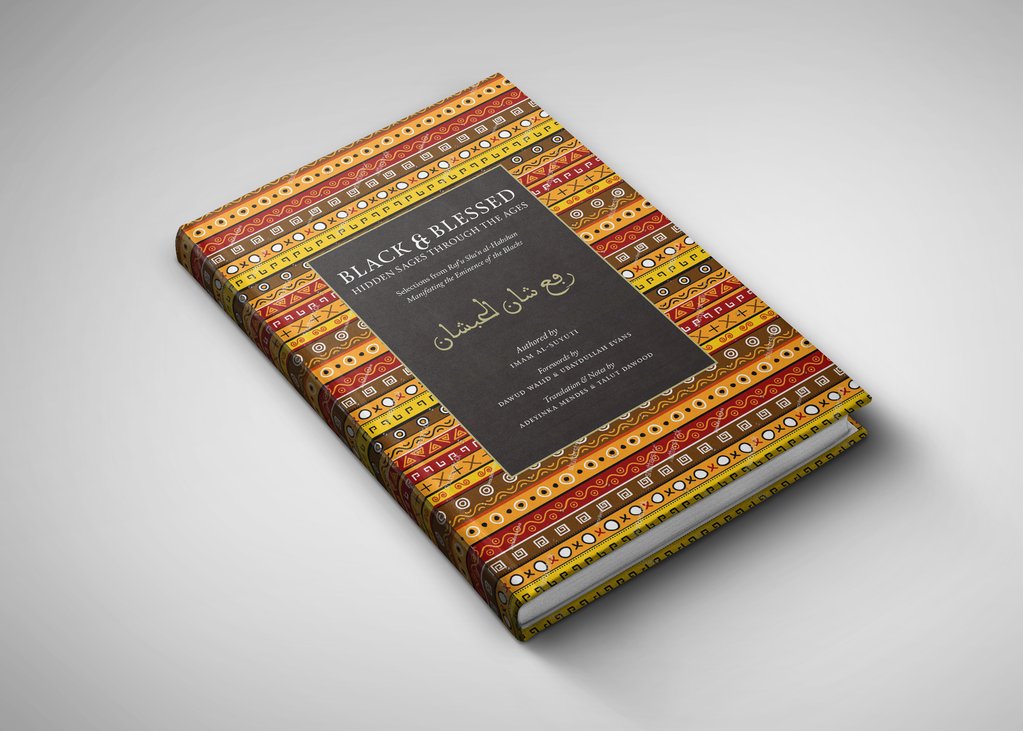 For some, Imam Muhammad Adeyinka Mendes’s beautifully rendered translation of The Spirits of Black Folk: Sages through the Ages will prompt them to ask: “Why is this necessary?” They would not be out of place to raise such a question. Many Muslims view the current conversation around race in our community with a jaundiced eye. In asking “why”, I do not believe they intend to invalidate the grievances of Black communities. Nor do I assume them to be enthralled to certain manifestations of anti-Blackness that instinctively respond with dismissal to any celebration of Black people. To be honest, I think they are justifiably anxious. It requires only a modicum of imagination and dialectical skill to realize the problematic implications of the way in which race and identity are discussed in our society. “How will such a specific focus on Blackness—itself socially constructed and incidental—alter our understanding of transcendent Truth?” they ask with great concern. And I appreciate this.
Ustadh Ubaydullah Evans ALIF. LĀM. MĪM. The first verse of Sūrat al-Baqarah and perhaps one of the most well-known of the Qur’ān is simply three seemingly unrelated letters. The ḥurūf al-muqaṭṭa’āt, the disjoined letter combinations which begin twenty-nine separate chapters of the Qur’ān are considered a mystery by the vast majority of classical authorities. Although exegetical literature reveals much speculation about these letters, nothing definitive is offered in the Qur’ān nor attributed to the Prophet (upon him be peace). The subtle irony is that this scripture, which contains verses such as:
{“We have sent it down as an Arabic Qur’ān so you may understand.” Quran 12:2} {“And we have revealed the Book as an explanation of everything.” Qur’ān 16:89} {“Those to whom we have given the book (the Qur’ān) study it as it should be studied: they are the ones that believe therein: those who reject faith therein the loss is their own.” Quran 2:121} Ustadh Ubaydullah Evans `ILM AL-KALĀM, the term applied to theology in classical Islam, occupies an interesting place in our history. Much more than law (fiqh), its intellectual counterpart, theology became the locus of the nascent Islamic civilization’s conversation with the world around it. The term itself, which literally translates as “talk-ology,” carried with it mild sarcasm owing to the fact that it tended to produce tedious dialectic and excessive amounts of technical jargon. Although it’s difficult to imagine, the terms “tawḥīd” (Divine Oneness) or “`aqīdah” (creed) – so absolutely fundamental to our own articulation of belief – would have drawn nothing but blank stares from the Companions of the Prophet (upon him be peace) themselves. As a community which pre-dated the development of discursive theology and its distinct vernacular, their religious experience simply did not encompass these terms or the discourse which gave them meaning.
Ustadh Ubaydullah Evans My friends, Imam Dawood Yasin and Imran Malik named the Clubhouse room “Evergreen Soul.” I had recently returned from a family hiking trip in Utah—for which Imam Dawood graciously assisted me with my equipment—and I agreed to share some stories. This trip, organized by my wife Hadiyah and with her careful, meticulous planning, was a first for our family. I entered the room prepared to offer standard fare: Funny anecdotes about my children and the stale bon mot about the gaping mouths and curious glances generated by a Black, Muslim family in rural Utah. What I encountered, however, was a deeply impassioned conversation led by two erudite Muslims who were also experienced outdoorsmen. The spiritual and intellectual vistas that were explored during the session—by the hosts as well as the attendees—prompted a reflection. |
|

 RSS Feed
stay connected
PO Box 871785 Canton, MI 48187
(734) 956-0698
(734) 956-0698
2024 © American Learning Institute for Muslims. All rights reserved.
ALIM is a 501(c)(3) organization. All donations are zakat-eligible and tax deductible. Our EIN is 38-3633579.
Zelle: admin@alimprogram.com
Terms of Service | Privacy Guidelines | Sign Up for ALIM Emails I Get ALIM Text Alerts
ALIM is a 501(c)(3) organization. All donations are zakat-eligible and tax deductible. Our EIN is 38-3633579.
Zelle: admin@alimprogram.com
Terms of Service | Privacy Guidelines | Sign Up for ALIM Emails I Get ALIM Text Alerts